No, the Federal Reserve Hasn’t Brought Inflation Down
Inflation in the US continues to fall from its peak last summer. But the Fed hasn’t been responsible for lower inflation — and understanding why is crucial to advancing progressive policy goals like maintaining high employment and expanding public investment.
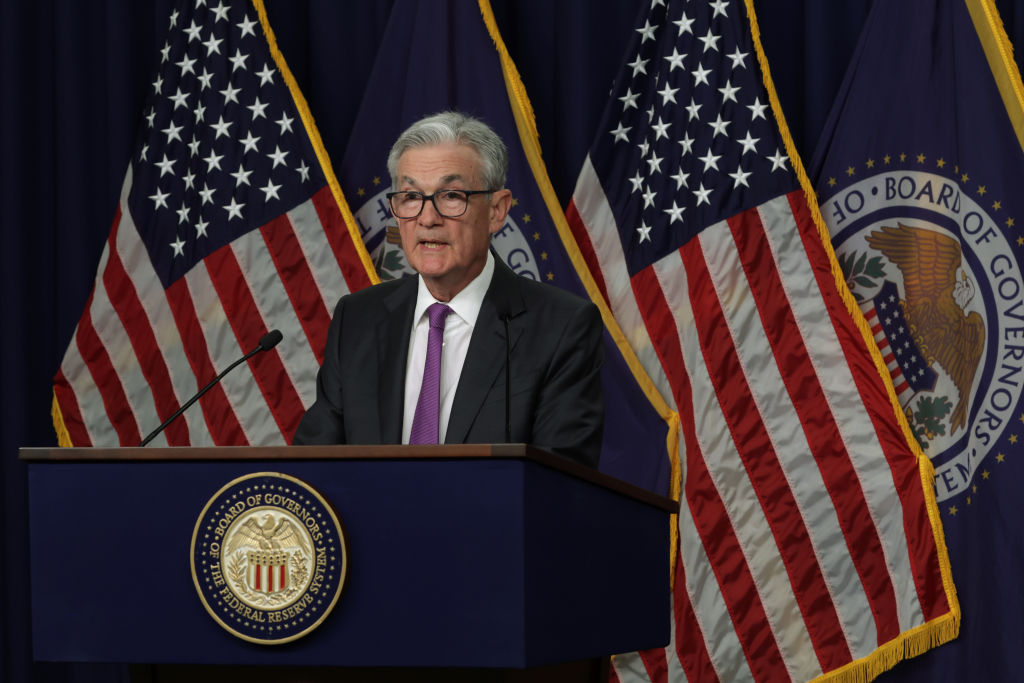
Federal Reserve Board chair Jerome Powell speaks during a news conference after a Federal Open Market Committee meeting on July 26, 2023 at the Federal Reserve in Washington, DC. (Alex Wong / Getty Images)
As inflation in the United States moderates from its peak last summer, nearly all reporting and analysis on the state of the economy is asking the same question: Has the Federal Reserve declared victory in its fight against rising prices?
The assumption motivating this question, widely shared among journalists and economists, is that the Federal Reserve’s discretionary monetary policy influences the price level by reducing demand and creating slack in the economy. Yet there has been little slack to speak of, either in the months before inflation peaked in June 2022 or in the year since. Unemployment remains low, and labor-force participation is high. The prices that have slowed the most have been in energy and food — outside the “core inflation” rate that the Fed says is its policy target.
In response to a reporter’s question about “the reasons why inflation has fallen” and how the Federal Reserve evaluates “factors that don’t stem directly from rate hikes . . . like easing supply chains and a drop in energy prices,” Powell said that “monetary policy is working about as we expect.” Higher rates will help lower demand in the future, Powell explained: “We think it’ll play an important role going forward, in particular in nonhousing services. That’s where the labor market will come in as a very, very important factor.”