At the Big Three Automakers, Workers Endure Dangerous Work Speeds and Horrible Hours
The United Auto Workers are starting to negotiate their next contract with the Big Three automakers. As bargaining begins, workers at the companies say management is pushing unsafe work paces, more and longer shifts, and divisions between workers.
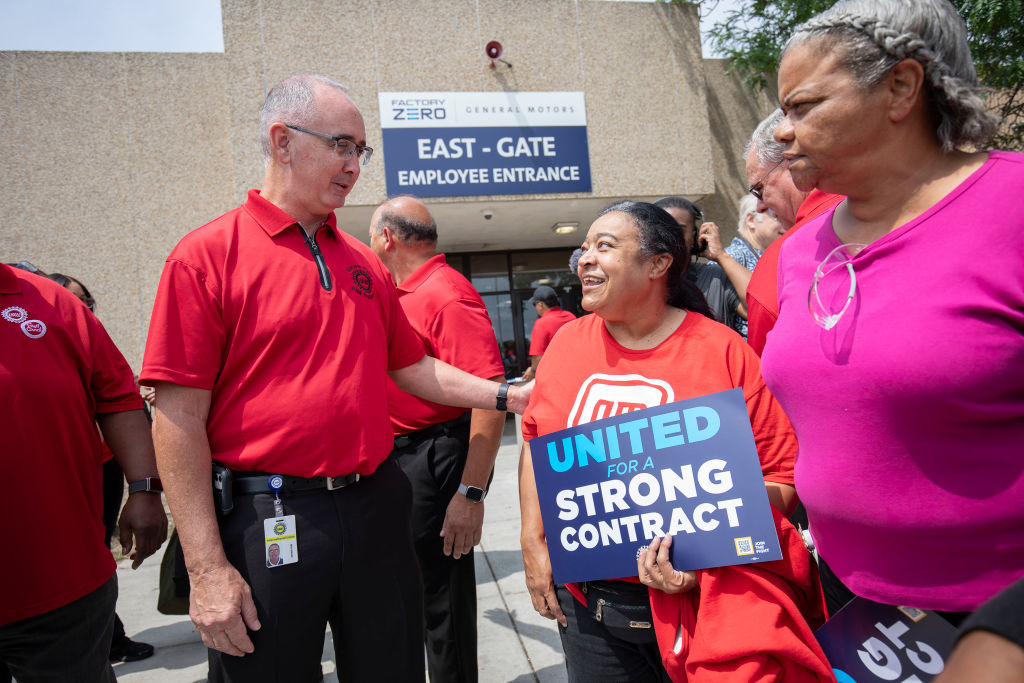
United Auto Workers president Shawn Fain speaks with workers at GM Factory ZERO on July 12, 2023 in Detroit, Michigan. (Bill Pugliano / Getty Images)
David Sandoval remembers when he and his coworkers had a whole seventy-two seconds to assemble their sections of each seat for the Ford F-150, back when he started at a Michigan parts plant in 2004.
Today, sixty seconds is the deadline managers give each team racing at a dozen stations: to bolt the frame together, lay electronics, add heating and cooling gear, set cushions, and attach trim. Robotic lifting arms help on only one or two steps; handheld tools and elbow grease must do the rest. Each crew is told to clear 680 seats in a ten-hour shift.
That harsh speedup makes it small wonder that repetitive motion injuries are piling up for US autoworkers, while the Big Three auto companies — Ford, General Motors (GM), and Stellantis (formerly Chrysler) — posted $250 billion in profits in just the last four years.