The Forgotten Case Against Milton Friedman
In 1967, Milton Friedman launched a counterrevolution in economics that overturned the Keynesian theory of inflation. Three years later, economist James Tobin issued a powerful theoretical rebuttal — but in the economics mainstream, it’s been all but forgotten.
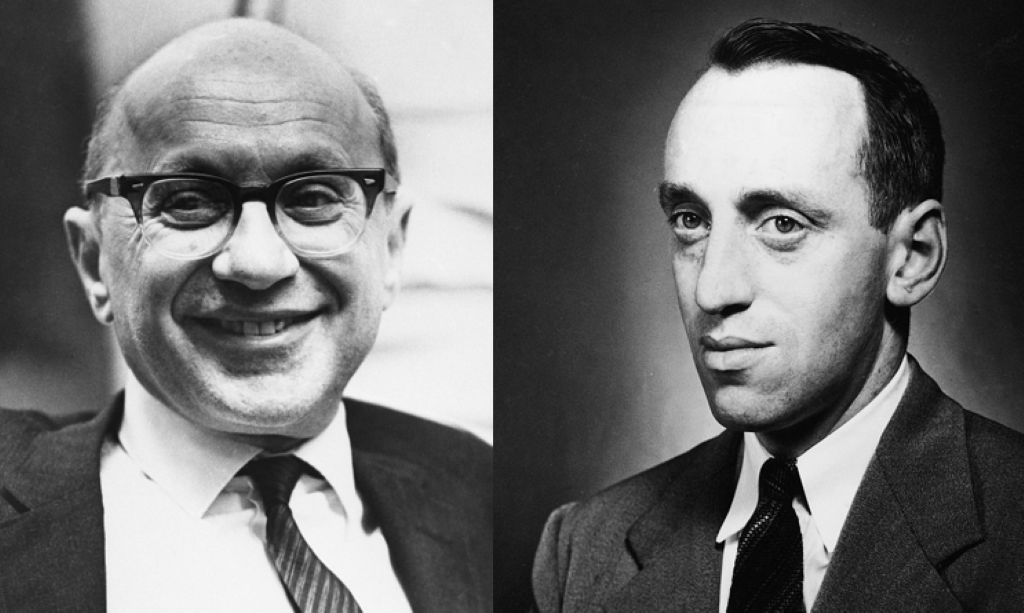
Economists Milton Friedman (L) and James Tobin (R). (Bettmann / Hulton Archive via Getty Images)
Milton Friedman revolutionized macroeconomics with his 1967 presidential speech to the American Economics Association (AEA), which presented a theory of the so-called natural rate of unemployment for the first time. That speech, which played a major role in discrediting the brand of Keynesianism that prevailed in postwar liberal economic policy thinking, remains one of the most frequently cited papers in all of economics.
Much less well remembered is the rebuttal to Friedman’s ideas issued by another future Nobel Laureate economist in another AEA presidential address, four years later: Yale University’s James Tobin. Tobin’s dueling theory of inflation held out the possibility of an alternative path for economics and macroeconomic policy, but it has seldom received the same recognition, or the same scholarly interest.
Jacobin’s Seth Ackerman spoke with Thomas Palley, coeditor of the Review of Keynesian Economics and former AFL-CIO assistant director of public policy, about why Tobin’s inflation theory matters today, and why the issue of inflation continues to perplex both the economics mainstream and the Left.