Karl Marx Knew That the Struggle for Reforms Was Part of the Struggle for Socialism
The tendency of some modern-day Marxists to pit reform against revolution is diametrically opposed to the vision of Karl Marx himself.
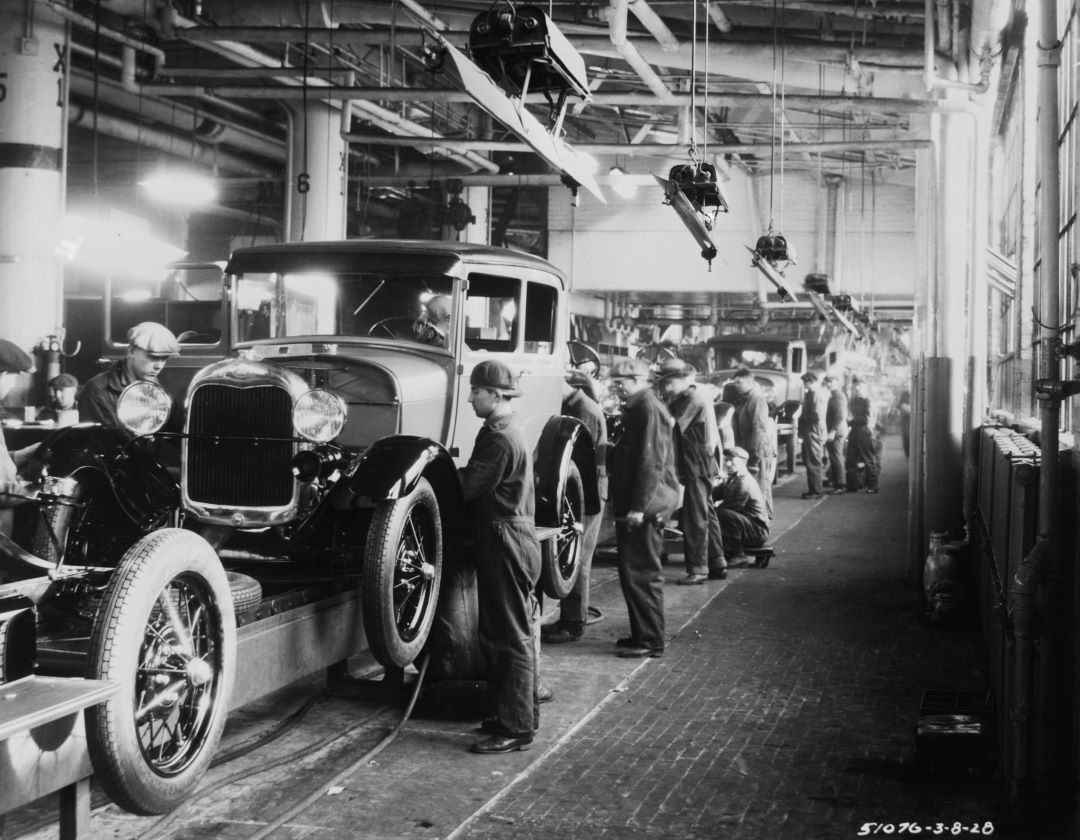
Assembly line workers inside the Ford Motor Company factory at Dearborn, Michigan. (Hulton Archive / Getty Images)
Last week, the New Left Review‘s Dylan Riley published a brief, barbed polemic against those adherents of “neo-Kautskyite” socialism — a tendency with which this magazine is reputed to be associated — who cling to illusory visions of new New Deals, “green or otherwise.”
Riley was categorical: “No socialist should advocate an ‘industrial policy’ of any sort.” Any future attempted New Deals will prove “self-defeating.” And those who don’t see this have fallen victim to a fatal error: they’ve failed to reckon with “the structural logic of capital.”
Logicians of Capital
Riley’s admonition is a reminder of the strange itinerary that “the structural logic of capital” has traced over the past century and a half. Karl Marx was the great pioneer of the concept of course. His lifelong intellectual project was to uncover the system’s inner “laws of motion” and then to ask: If you have a society propelled by such inner dynamics, in what direction is it likely to go?