The Future of Academic Unionism Will Play Out in the University of California System
The recent academic workers’ strike at the University of California was the largest of its kind in US history. It also saw robust internal debate about whether or not the contract was good enough.
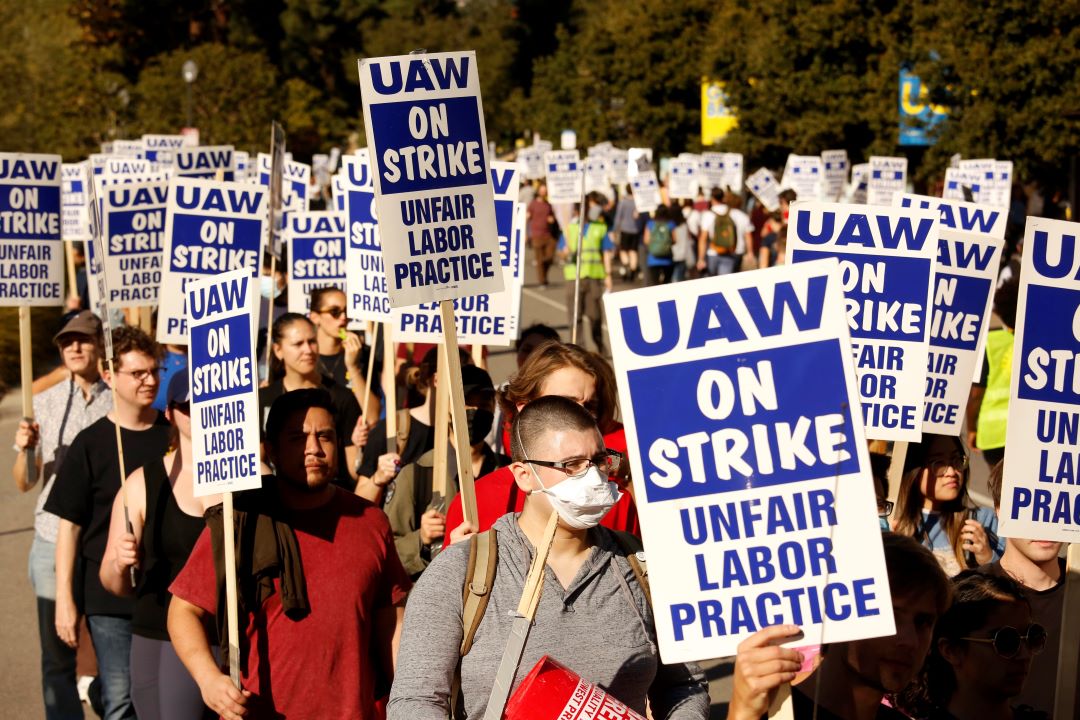
UCLA academic workers join tens of thousands of their peers across the University of California system in striking for more equitable wages and better working conditions on the UCLA campus in Los Angeles on November 16, 2022. (Genaro Molina / Los Angeles Times via Getty Images)
Academic workers are on the move. After decades of haggling over whether they were actual workers or just trainees learning their craft, and by extension whether they were entitled to basic labor protections like the right to join a union, academic workers are settling the question by unionizing in ever greater numbers.
Just in the past year, academic workers at twenty-five campuses including over 25,000 workers unionized, including MIT, Northwestern, Yale, Johns Hopkins, the University of New Mexico, and Boston University. These were not nail-biter elections. Blowout margins upward of 80–90 percent were common. More elections are underway, scheduled, or imminent at the University of Chicago, Dartmouth, the University of Southern California, Caltech, and more.
The scope of who counts as an academic worker has also expanded far beyond the standard image of a graduate student teaching assistant. It now includes larger groups of research assistants, adjunct instructors, and undergraduate workers at campuses like Kenyon, Grinnell, and the University of Oregon.