The “Labor Question” Is About Life During and After Capitalism
Throughout American history, no matter the oscillations in politics, the economy, or class struggle, the “labor question” refuses to die.
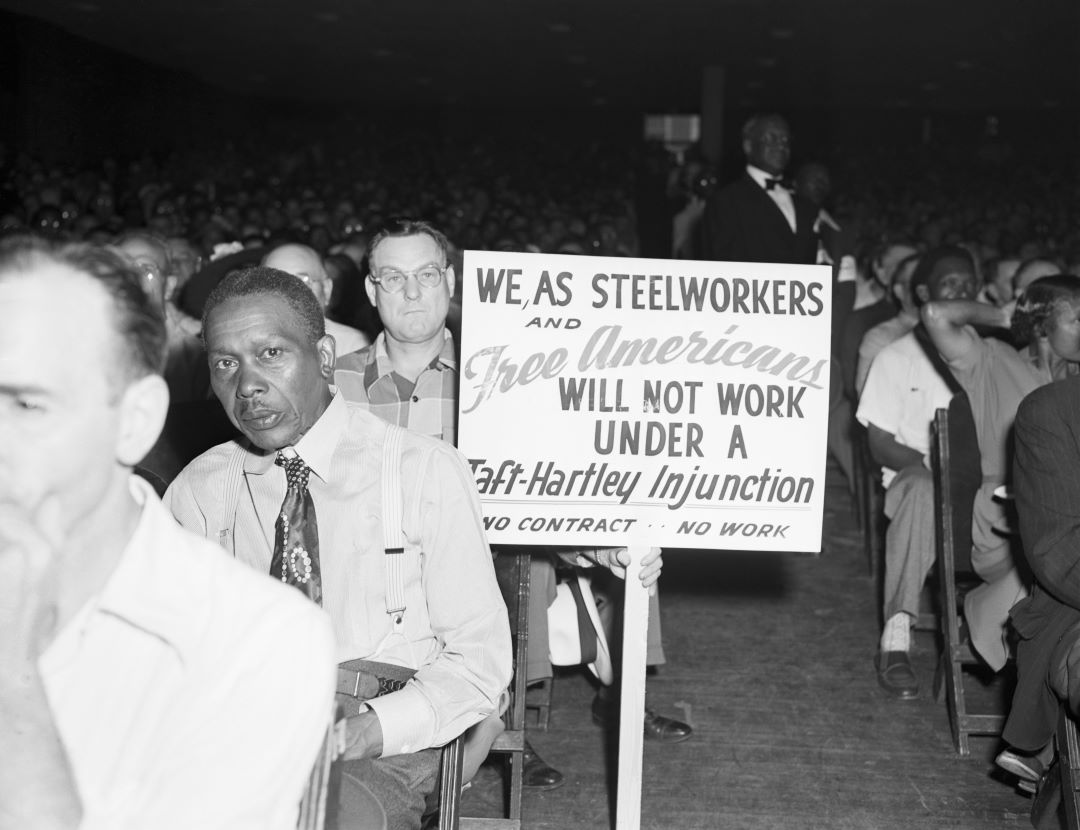
A steelworker holds a sign as 8,000 members of the United Steelworkers’ Union met in Gary, Indiana, on June 22, 1952, to hear a speech by C10 President Philip Murray. (Bettmann / Getty Images)
The news is that the labor movement did not go away to die. It seemed like it had. Rumors of its death turned out to be premature however. Suddenly, strikes, organizing campaigns, boycotts, and living wage referenda and ordinances show up everywhere.
Polls say people like unions. The president says he likes unions. More important, all sorts of workers — baristas, warehouse-order pickers, journalists, schoolteachers, museum curators, techies, professors and their graduate students, coal miners, railroad engineers, nurses, pilots, stewards and stewardesses, fast-food servers, bank tellers, hospitality and hospital employees, people at work in virtually every sector of the economy — are summoning up the courage, the ingenuity, and the perseverance to challenge the absolutism that the employing class has exercised over the workplace for quite some time.
Democracy may have been in jeopardy during the recent midterm elections. Democracy at work, meanwhile, is practically an oxymoron and has been for decades. Few noticed, until now.