J. Edgar Hoover Tried to Destroy the Left — and Liberals Enabled Him
J. Edgar Hoover is notorious for his decades-long campaign to stamp out the Left by surveilling and even killing radicals like Fred Hampton. What is less well known is that liberals played an important role in enabling Hoover’s antidemocratic crusade.
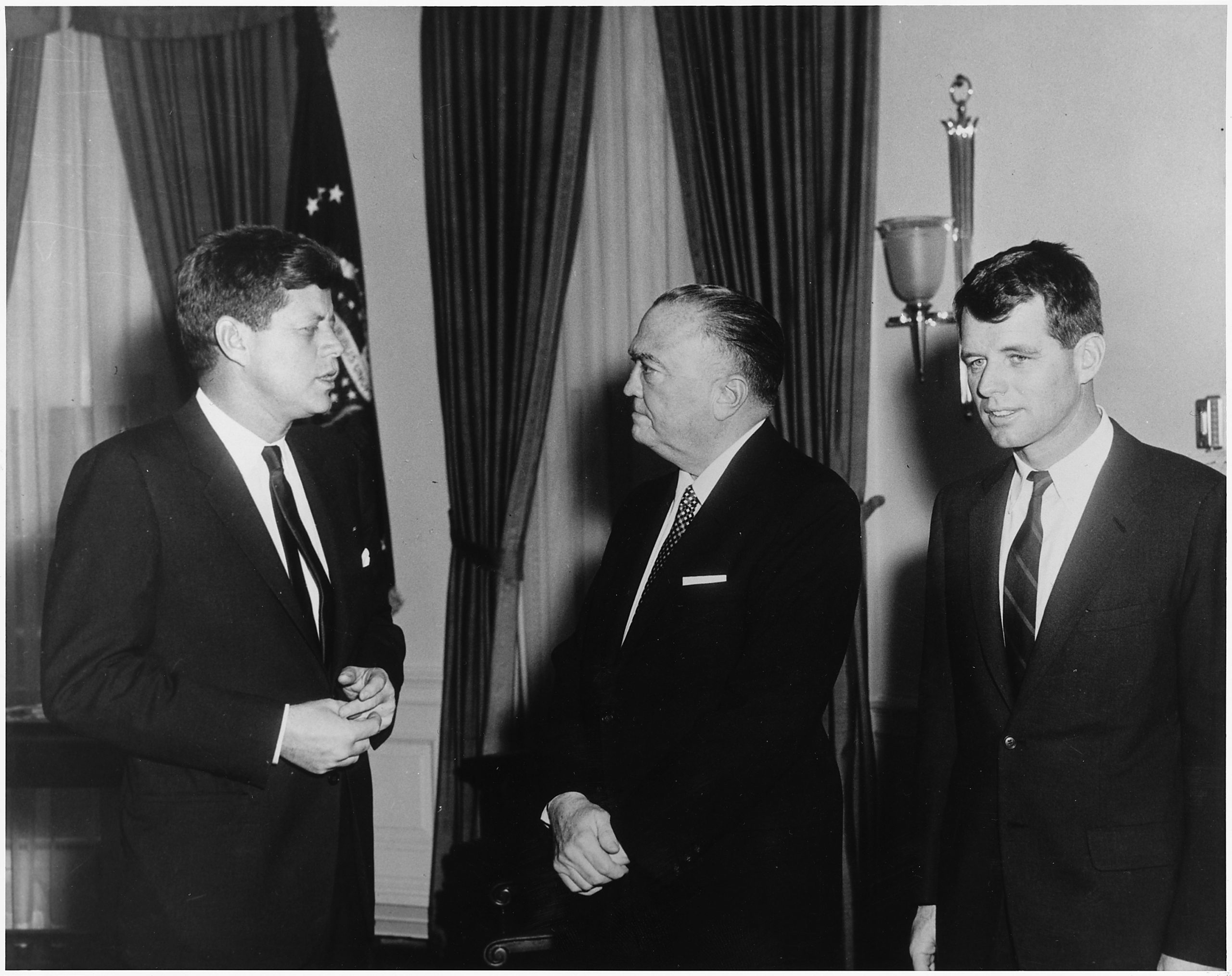
J. Edgar Hoover (center) with President John F. Kennedy and Attorney General Robert F. Kennedy, February 23, 1961. (US National Archives and Records Administration via Wikimedia Commons)
Few figures deserve the animus of the Left more than J. Edgar Hoover, the former director of the Federal Bureau of Investigation (FBI). During his forty-eight years in power — stretching from 1924 to his death in 1972 — Hoover presided over a counterintelligence witch hunt that treated members of the American Communist Party as treasonous, and infiltrated and surveilled left-wing movements. The FBI’s record under its Hoover-era COINTELPRO program is particularly notorious — from the harassment and wiretapping of Martin Luther King, Jr. (including sending a message that sought to goad him into suicide) to the murder of Black Panther Party leader Fred Hampton in Chicago in 1969. Yet Hoover was celebrated by liberals and conservatives alike in his time, his power unchecked.
Historian Beverly Gage’s new book, G-Man: J. Edgar Hoover and the Making of the American Century, tries to understand how such an undemocratic figure like Hoover — at the helm of an undemocratic institution — was able to wield such influence within a formally democratic government. Drawing on unclassified FBI records and Hoover’s personal papers, Gage paints a nuanced, instructive portrait of Hoover that places him within the growth of the national security state, the rise of the United States as a global power, and the evolution of liberalism and conservatism after World War I.
Fellow historian Michael Brenes spoke to Gage about J. Edgar Hoover and his relationship with liberals, the far right, and emancipatory movements today.