The Workers Who Seized the Means of Production
During the height of Salvador Allende’s socialist government in Chile, workers began to take over their factories and assert their right to live free of those who had oppressed them for generations.
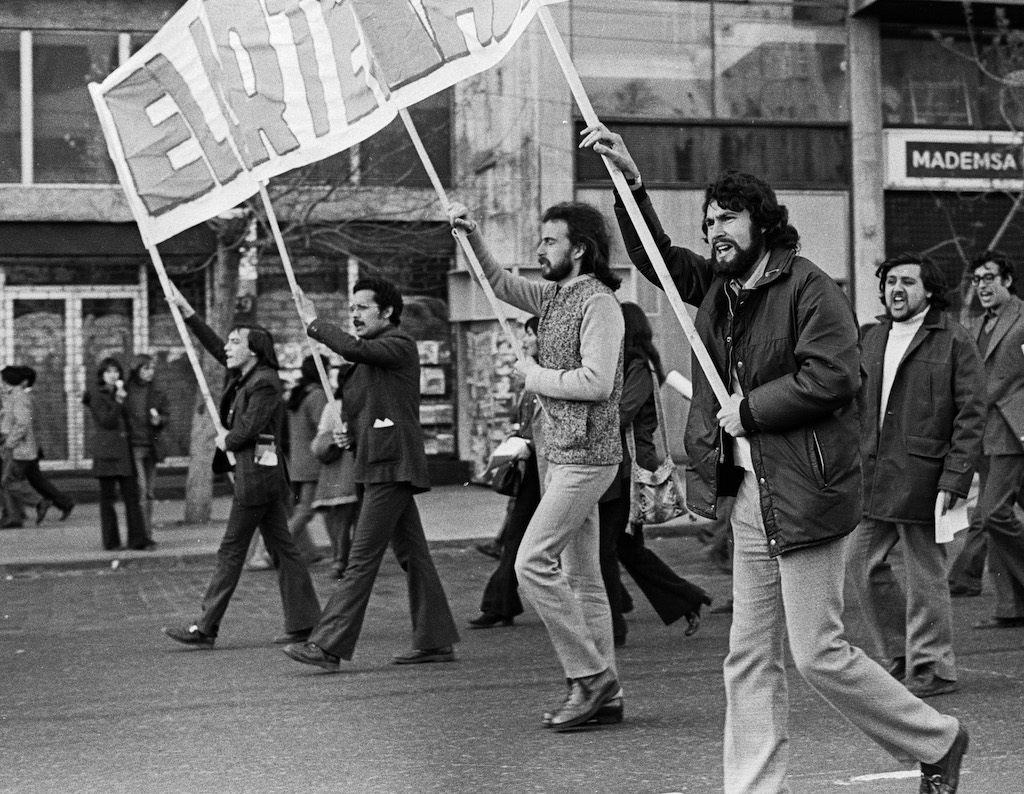
One of the last Popular Unity rallies during the Salvador Allende government in Santiago, Chile, 1973. (Marcelo Montecino / Getty Images)
On the night of Wednesday, April 28, 1971, hundreds of Chilean workers and their families converged on a large textile factory in downtown Santiago. They were celebrating — hugging, singing, dancing, crying, kissing, and shouting in joy. They had just received word that after three days of being out on strike, Chilean president Salvador Allende had finally agreed to socialize their factory.
The firm had for decades been in the hands of the Yarur family, one of Chile’s dominant economic “clans,” with Amador Yarur running the factory at that time. His brother, Jorge, during his short stint in management before Amador took over, had instituted a new system of industrial management, the Taylor System, surveilling the workplaces and controlling every aspect of workers’ day. Lower and middle management were given despotic power over the shop floor. Supervisors would yell at workers and even hit them if they were considered inefficient.
Coupled with the grueling work, pay was so low that many workers could not afford basic needs like health care, education, or even lunch. In Weavers of Revolution: The Yarur Workers and Chile’s Road to Socialism, Peter Winn writes that suspected disloyalty was the worst transgression imaginable, incurring Yarur’s wrath in the form of being transferred to work in “‘Siberia,’ an unheated and damp underground storeroom,” getting pay docked, or even being fired.