Why Capitalists Care About Our Record-Low Birth Rate
One reason the corporate elite has an interest in antiabortion policies is because they hope to lower the price of labor — the labor of bearing and rearing children.
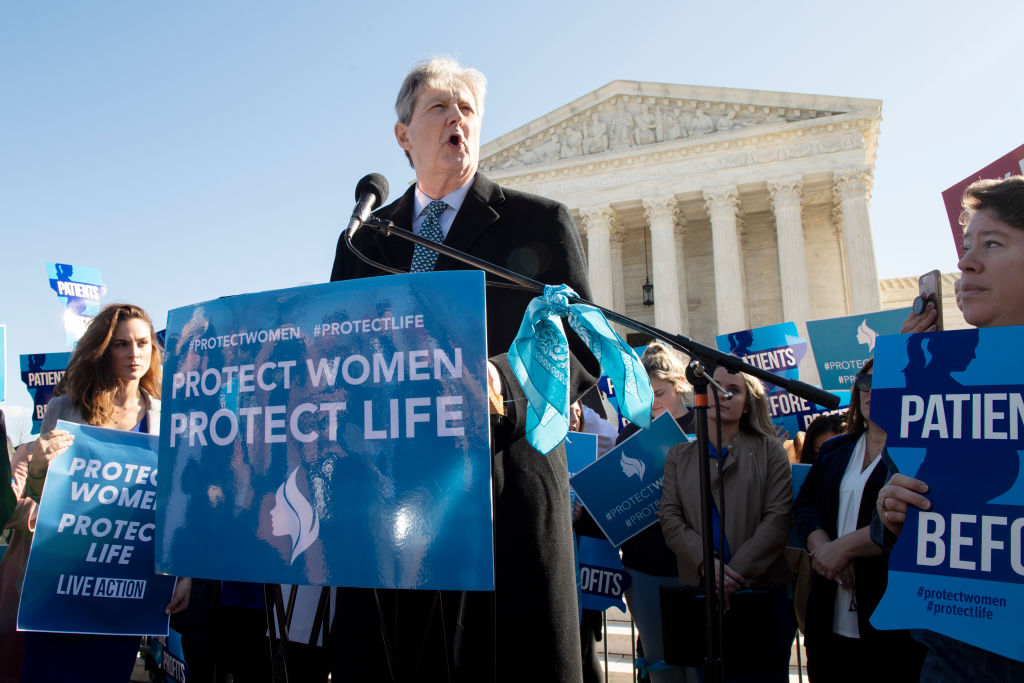
Senator John Kennedy (R-LA), speaks to a group of anti-abortion activists during a demonstration outside the Supreme Court in Washington on March 4, 2020. (Caroline Brehman / CQ-Roll Call, Inc via Getty Images)
The United States is a particularly hostile environment for parenting. Workers face long hours, inadequate pay, unreliable health care, overpriced housing, paltry unpaid leave, and childcare that can eat a whole paycheck. As a result, the US birth rate is now at a record low of 1.64 children per woman, considerably below replacement.
When Western Europe faced dramatic declines in births in the 1970s, governments instituted universal childcare, long paid family leaves (up to a year), and substantial child allowance checks, on top of free health care. But in the United States, the working class has little political representation, so the costs of bearing and rearing children are largely borne by families. Instead of support, we have faced a cheaper, meaner pronatalism: reproductive coercion.
Paul Heideman argued recently that the corporate class is unconcerned about the birth rate, and that abortion is essentially a fight between ordinary people. In fact, business interests have a huge stake in the outcome of reproductive politics. The fight over abortion is a fight over the labor of reproducing society — and barriers to reproductive control have always been about exploiting this work.