To Roll Back the Police State, We Need to Tackle Economic Inequality
The last few years have seen unprecedented mobilization of mass outrage against the most blatantly racist aspects of US policing. But we can’t confront police abuses without addressing their role in our society as managers of an unequal class status quo.
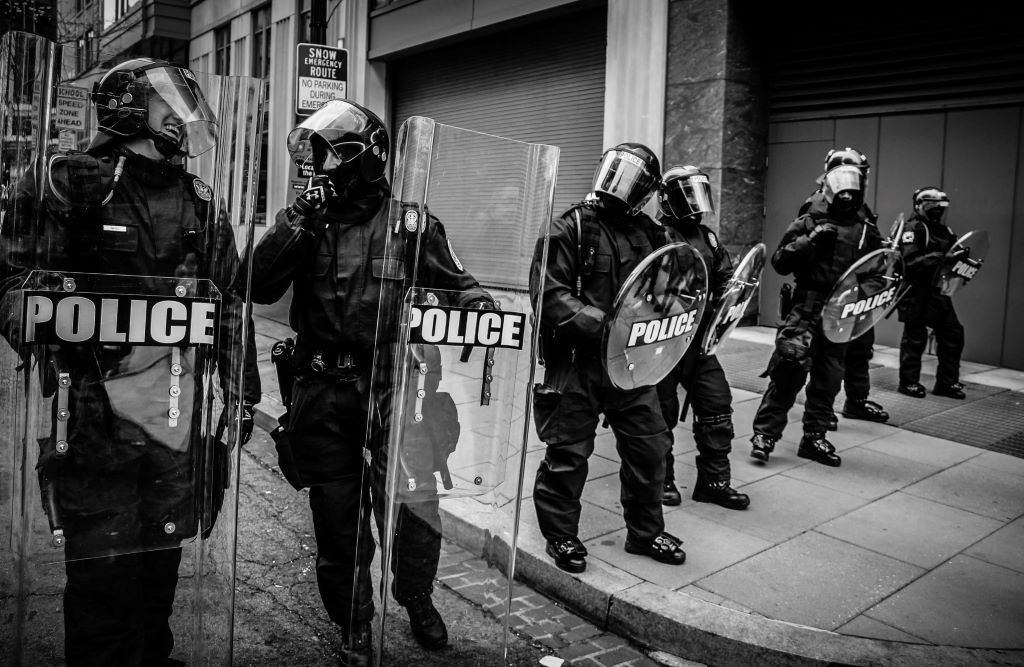
Policing has always been about protecting class relations, which is why the focus of policing, its necessities, and its central modes shift from one historical moment to the next. (Spenser H / Unsplash)
In the spring of 2020, the police murder of George Floyd sparked an unprecedented upsurge of protest, notable not just for its intensity — with an estimated 15 to 26 million people joining street protests around the country (and many more around the world) — but also for the breadth of sympathy expressed for the cause and the Black Lives Matter slogan, from the US Congress to Nike and the NFL.
Two years later, it seems as if nothing has changed. Though perhaps shocking, this turn of events should not have surprised anyone, argues Cedric Johnson, professor of black studies and political science at the University of Illinois at Chicago. In his latest book, The Panthers Can’t Save Us Now, he explains why police brutality cannot be fought through anti-racist training seminars and why ending police violence depends on the fight against poverty. Jacobin Germany managing editor Astrid Zimmerman spoke with Johnson about the history of policing, its role in managing class relations, and why tackling economic inequality is essential to undoing the police state.
Astrid Zimmermann
Police brutality is often described as a symptom of racial discrimination. You argue that this actually obscures the true social function of the police — which is to secure class relations. This aspect becomes really apparent when we look at the historic roots of police work. So how has policing changed over the course of history?
Cedric Johnson