The 1877 Class War That America Forgot
In 1877, one million workers went on strike and fought police and federal troops in cities across America. The monikers “Great Upheaval” and “Great Railroad Strike” undersell what verged on a second Civil War — this time pitting labor against capital.
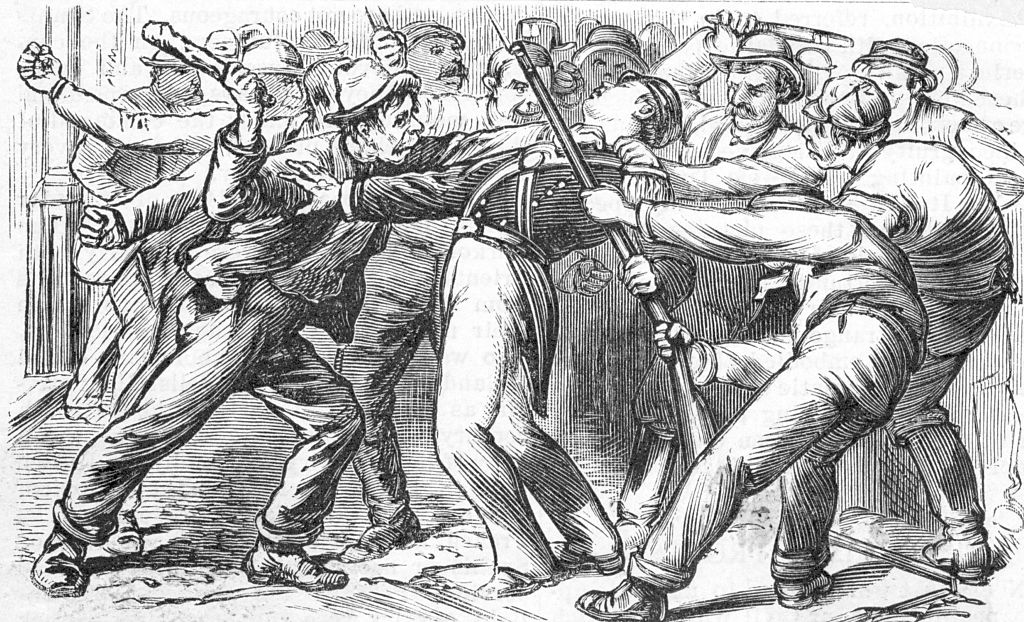
Workers attack a national guardsman during the Great Railroad Strike, 1877. (Getty Images)
The first nationwide strike in United States history began humbly enough.
On July 16, 1877, forty railroad workers responded to news of a pay cut by stopping work and shutting down rail traffic in Martinsburg, West Virginia. That single event had a domino effect, spreading rebellion like wildfire among America’s working class. By the end of the month, one million workers had stopped working in industrial cities across fourteen states, from New York City to San Francisco.
Writing to Friedrich Engels on July 24 of that year, Karl Marx called it “the first uprising against the oligarchy of capital which had developed since the Civil War,” which could lead to a “serious workers’ party in the United States.”