The First Principle of Union Organizing: Spontaneity Isn’t Enough
The seemingly spontaneous upsurges at companies like Starbucks and Amazon are an inspiring sign of life within the workers’ movement. But spontaneity is nowhere near enough to turn labor’s dismal fortunes around.
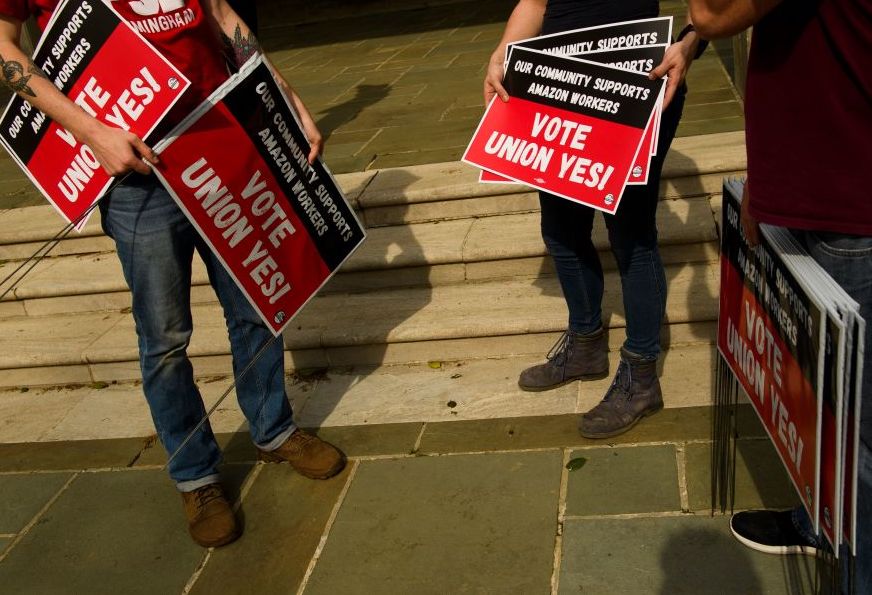
People hold “Vote Union Yes!” signs during a protest at Kelly Ingram Park on March 27, 2021 in Birmingham, Alabama. (Patrick T. FALLON / AFP via Getty Images)
If today’s unionization rate in the US was the same as it was forty years ago (already a low bar, as that number is significantly down from the mid-1950s peak), the number of union members would be well over 30 million instead of about 17 million. In fact, though the workforce has increased by some 56 million since the early 1980s, the number of union members has fallen by over 3 million.
If it’s hard to grasp the extent of this decline, it’s even harder to fathom fixing this by way of, as Chris Brooks has proposed, a greater reliance on worker spontaneity. Brooks, a former staff writer–organizer with Labor Notes and now a staff organizer at the NewsGuild of New York, seems to imply that organizers like himself should largely give up on, or at least recognize the occasional need to ignore, what he calls “structure-based” organizing strategies and support any actions that small numbers of rank-and-file workers might call for — or just “get out of the way.”
Strong words. But if it’s really that simple, there are hundreds of thousands of workplaces where union organizers have no presence — they’re already well out of the way in the sense that they’ve never been there. Yet spontaneous unionization is hardly running rampant through workplaces across the United States and Canada.