The US Lost in Afghanistan. But US Imperialism Isn’t Going Anywhere.
The United States suffered grave losses in Iraq and Afghanistan, just as it did in Vietnam. But we shouldn’t mistake revisions of US military strategy after calamitous failures for a turn away from US imperialist ambitions.
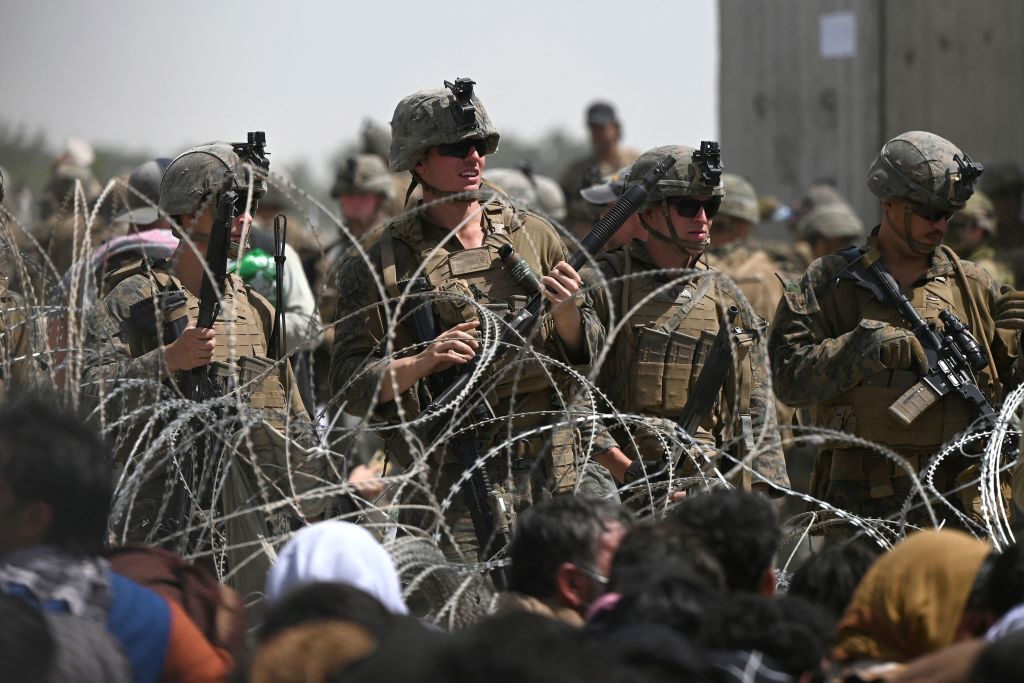
US soldiers stand guard behind barbed wire as Afghans sit on a roadside near the military part of the airport in Kabul on August 20, 2021. (Wakil Kohsar / AFP via Getty Images)
The debacle of the US-sponsored Afghan puppet government has inspired countless obituaries of American imperial might. These obituaries are premature.
The antiwar movement should be under no illusion that the era of US imperialist warfare has come to an end with the US withdrawal from Afghanistan. What is taking place is no more than a reload and update of the lessons that were drawn from Vietnam, with a view to achieve smarter management and higher cost-effectiveness of US military engagements — not back away from the global dominance of US imperial power.
The United States’ defeat in Vietnam, concluded by the withdrawal of US troops in 1973, led to a major revision in military strategy that prepared the United States for the wars of the digital age. The domestic impact of Vietnam was enormous, especially the massive aversion to war that developed among the US population, particularly the youth. Imperialist warmongers called it “Vietnam syndrome,” seeing a disease in what was actually a very healthy public wariness toward the power elite’s inclination to launch imperial expeditions.