Imagine a New York City Not Dominated by Real Estate
New York’s commercial real estate sector is in crisis, as office workers are increasingly unwilling to come back into a physical office. It’s an opportunity to rethink what a city that serves its residents rather than commercial landlords could look like.
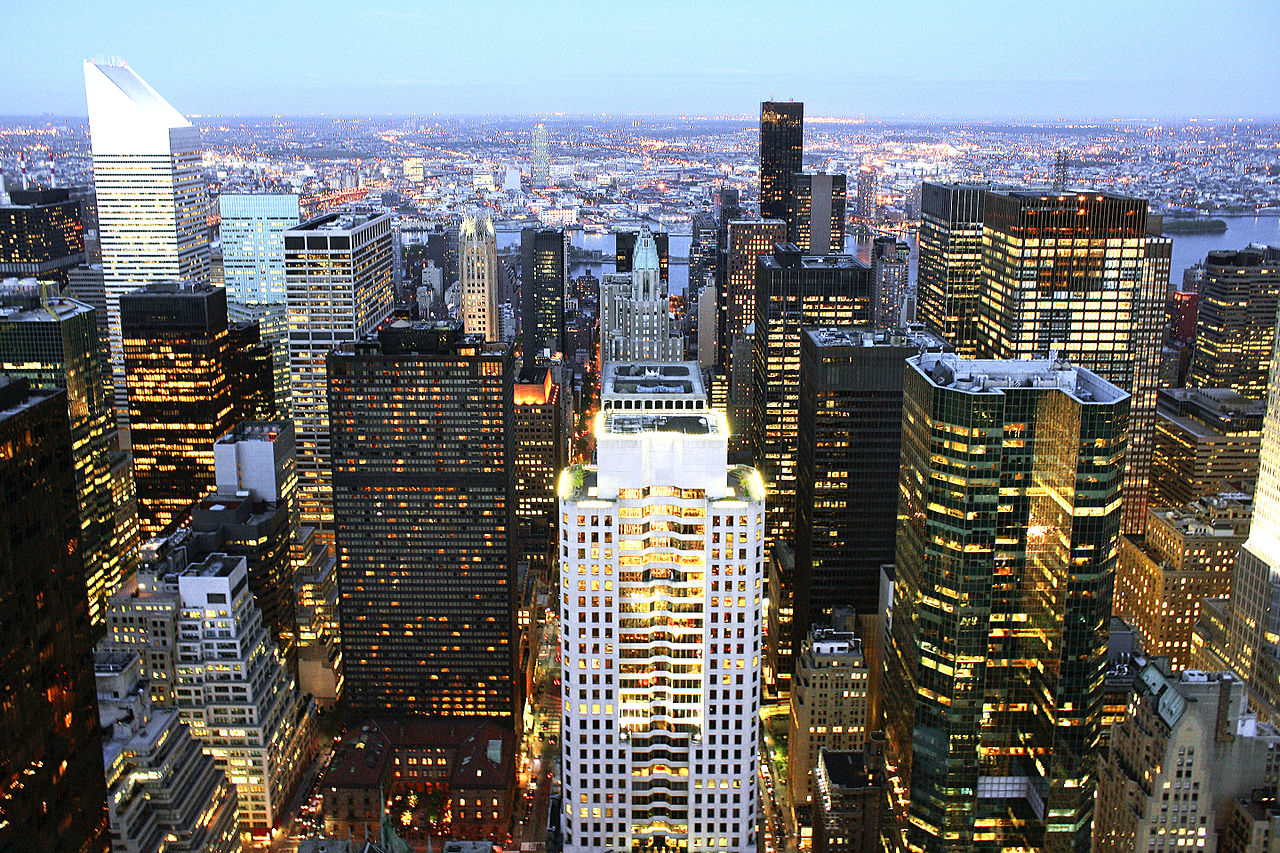
The East Midtown skyline in New York City in 2011. (Dimitry B. / Wikimedia Commons)
You probably missed Andrew Cuomo’s July 28 remarks to the Association for a Better New York, one of his last gubernatorial acts before announcing his long-overdue resignation. Cuomo has resigned as governor (I know I just wrote that, but it’s fun to repeat it), but the speech was a revealing sign of how deeply concerned New York’s political and economic elite are about the economic impacts of remote work — and how few solutions they have beyond forcing people back into offices they no longer need.
Manhattan skyscrapers may not go the way of Borders bookstores, your local newspaper, and other businesses ruined by online alternatives. But it’s clear that Zoom poses a major threat to commercial real estate developers, who have seen New York City property values almost triple over the last twenty years. That in turn is a major problem for cities like New York that have become dangerously dependent on rising real estate costs as their primary engine of economic growth and tax revenue.
Of course, this urban model has led to ever-rising rents that have driven ordinary New Yorkers into poverty and displacement. So a crisis for real estate is also an opportunity for socialists to put forward a different vision for the city’s future, one that looks to serve the people actually living here instead of trying to replace them with higher-paying customers.