The Oceans That Keep Capitalism Afloat
From maritime empires to modern logistics, capitalism has been forged on the seas.
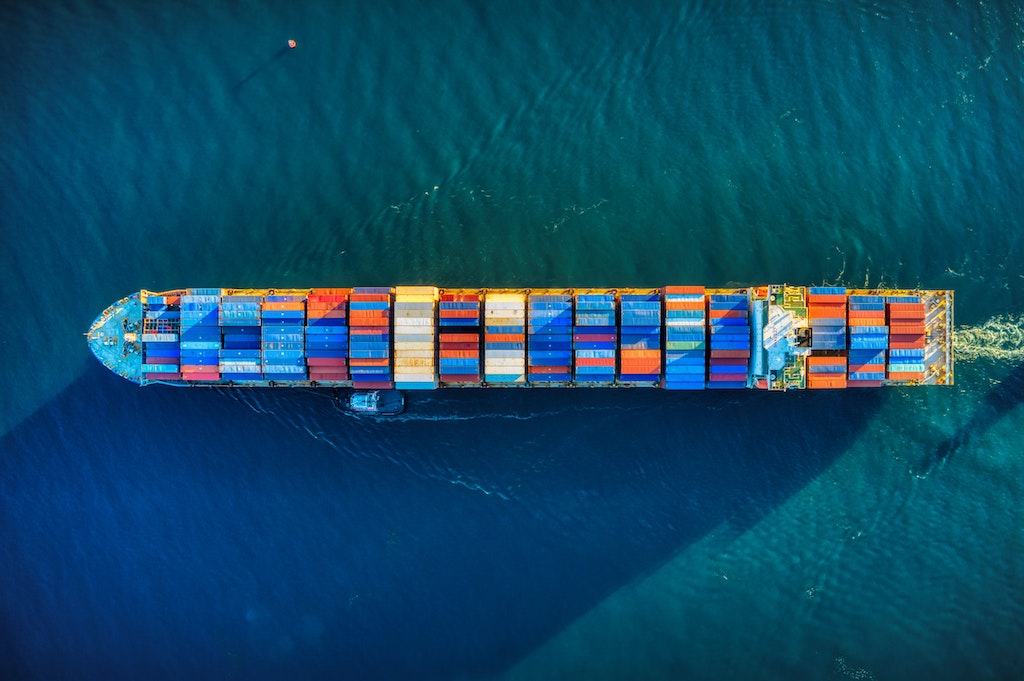
Dominating the oceans has been central to capitalism. (Cameron Venti / Unsplash)
The recent blockage of the Suez Canal generated unprecedented interest in the central role played by container shipping in the global economy. Images of the Ever Given’s blockage brought home the reality that capitalism’s seemingly magical global supply chains are in fact based on real equipment and real workers. In their recent book Capitalism and the Sea, Liam Campling and Alejandro Colás make clear that the key issues evident in the Suez blockage form part of a much longer history of capitalist accumulation, competition, extraction, and exploitation on the seas. They argue that the history of capitalism cannot be understood without understanding its often neglected maritime dimension. Their book attempts to remedy this omission by bringing the world’s oceans to the very center of the story.
The authors trace this history back to the origins of capitalism in Western Europe. Bridging a key theoretical divide in Marxist historiography, they argue that capitalism “was born in the countryside but nurtured through international trade.” That is to say, it emerged “out of feudal class antagonisms which subsequently developed by latching onto pre-existing money and commercial circuits of capital.” The oceans “offered a cheaper and faster means of transport” for “the circulation of commodities, humans, ideas and technologies” and “encouraged the institutional development and geographical convergence of banking, insurance, shipbuilding and related commercial infrastructure in seaports.” It was Britain’s early ability to dominate the high seas that allowed it to become the first global capitalist hegemon, ruling over a worldwide empire from the port city of London.
The organizing principle adopted by Campling and Colás is that of capitalism as a totality. From there, the book traces out multiple lines of inquiry, considering the oceans as trade routes, strategic spaces for capitalist states, sources of natural resources, carbon sinks, the backdrop for what is often highly exploitative and racialized work, and much else besides. Like Laleh Khalili’s Sinews of War and Trade: Shipping and Capitalism in the Arabian Peninsula, also published last year by Verso, this kaleidoscopic approach to the topic allows for a particularly broad perspective, drawing out often unexpected threads of continuity and change. A dizzying array of issues are considered within the realms of production, circulation, social reproduction, and extraction, including the enduring role of imperialism, white supremacy, labor exploitation, and the externalization of environmental costs in global maritime capitalism.