The Politics of a Second Gilded Age
The mass inequality of America’s first Gilded Age thrived on identity-based partisanship, helping extinguish the fires of class rage. In 2021, we’re headed down the same path.
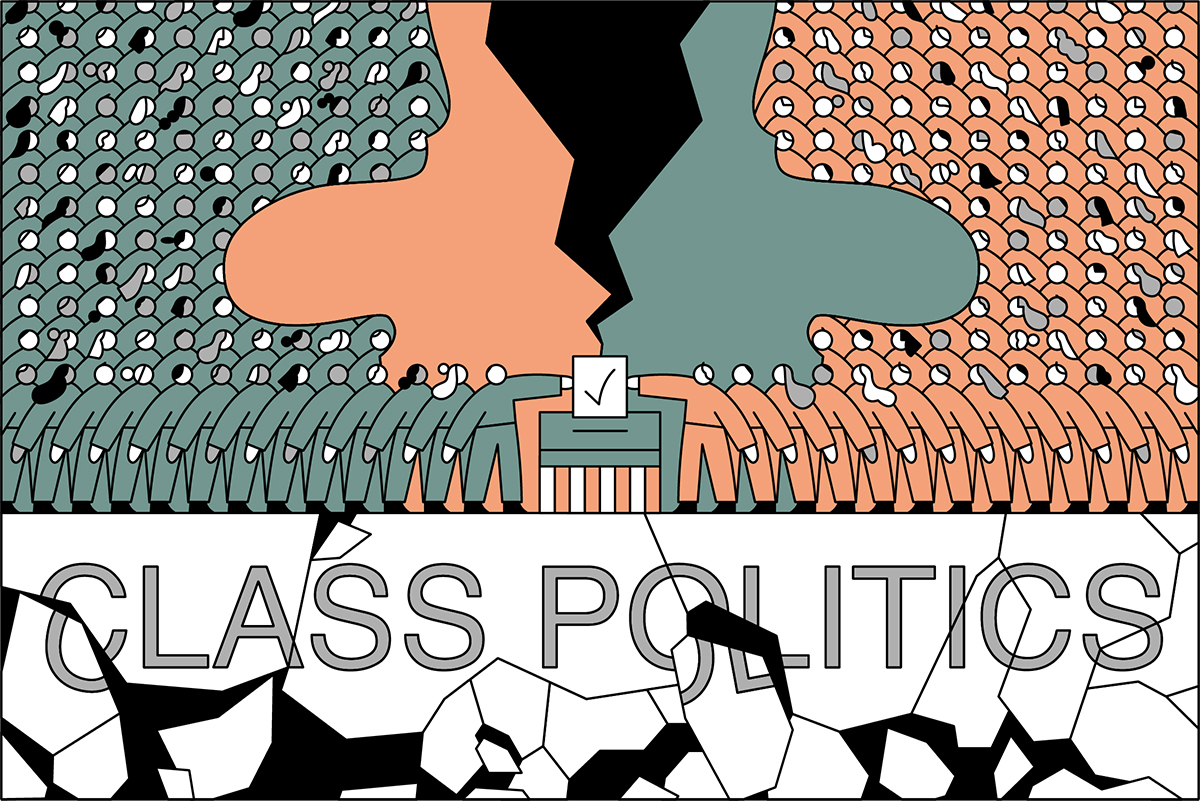
Illustration by Rose Wong
The most important election of our lifetime — until the next one — produced no fewer than three big, wet American winners. Amid plague, protest, and violence, three larger trends emerged to mark the landscape of twenty-first-century politics far more distinctly than any candidate or ideology.
In both a mathematical and a historical sense, America’s most notable winner was that heartwarming index of civic health, participation in the democratic process. More than two-thirds of eligible voters cast a ballot this fall, making 2020 the highest-turnout election since 1900. New coronavirus-related voting options may explain some of this surge, but not all of it, since participation also shot up in states that largely refused to expand ballot access. In other states, like Colorado, Maine, and Minnesota, turnout crested above the practically Scandinavian threshold of 75 percent.
This historic mobilization of the American masses led to the election of a Democratic Party placeholder, whose launchpad to the world-straddling power of the US presidency was a thirty-six-year career representing a province smaller than Cyprus. There is something both absurd and apt about the simple fact that Joe Biden defeated Donald Trump in a contest that generated more mass participation than any of the campaigns that anointed Barack Obama, Ronald Reagan, or Franklin D. Roosevelt.