Failure Is an Option
Haunted by the specter of democracy, the Constitution’s framers blundered into a historic miscalculation. We’re still living with the consequences.
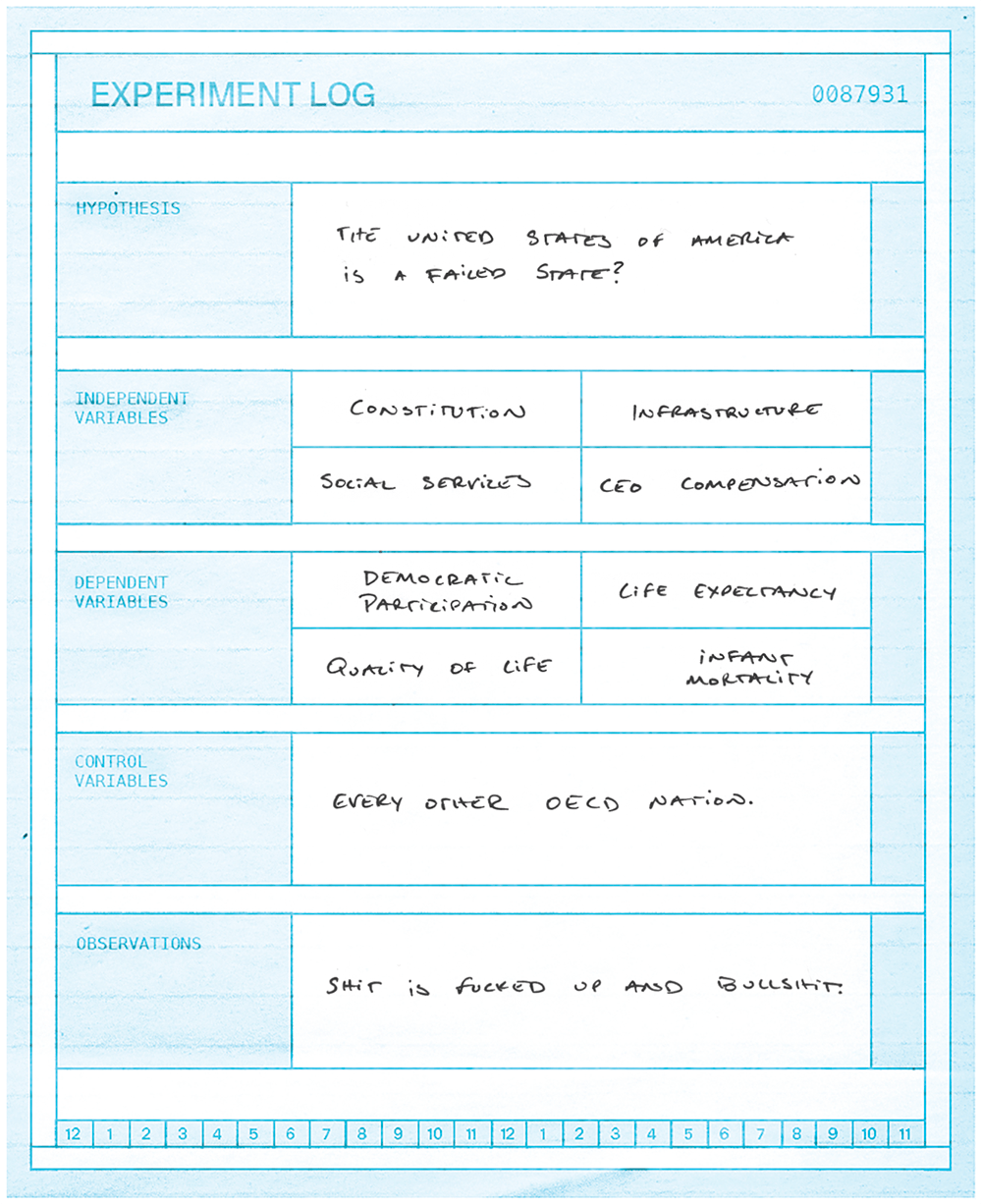
You would think a country that is so fond of calling itself an experiment would at least be alert to the possibility of failure. But this year, with seeming surprise, millions of Americans became aware of their failing state for the first time.
The picture sharpened as the pandemic progressed, like a photo coming into focus: the United States is a rich country that can’t deliver the mail. It can’t hold orderly elections or contain disease outbreaks or manage wildfires or build subways. Dozens of state unemployment systems collapsed this spring when their punch-card-era mainframes, programmed in the digital equivalent of Sanskrit, balked at a change in the benefit formula, leaving millions of jobless people without income. This was the American state encapsulated: the millionaire governor of New Jersey on TV, pleading for volunteers to fix the state’s computers, while thousands of his citizens quietly faced private Armageddons.
The American state is hardly dormant. It criminalizes more behavior than any democracy on earth. It imprisons its citizens at rates that dwarf its peers. Typically for a failed state where violence is endemic and the public heavily armed, its police forces kill with impunity — but they are no less incompetent or underprofessionalized for that. This summer, the LA County Sheriff’s Department was alleged to have a street gang housed inside the department: “The Executioners, a band of deputies. . .sporting tattoos of a skull with Nazi imagery and an AK-47 — celebrates deputy shootings and the induction of new members with ‘inking parties,’” the LA Times reported in July.