We Need a Politics That Is Not Only Class-Focused, but Class-Rooted
It’s not enough to make class the subject of our politics. We need to develop our political demands from a ferment that is rooted in class organizing and union density.
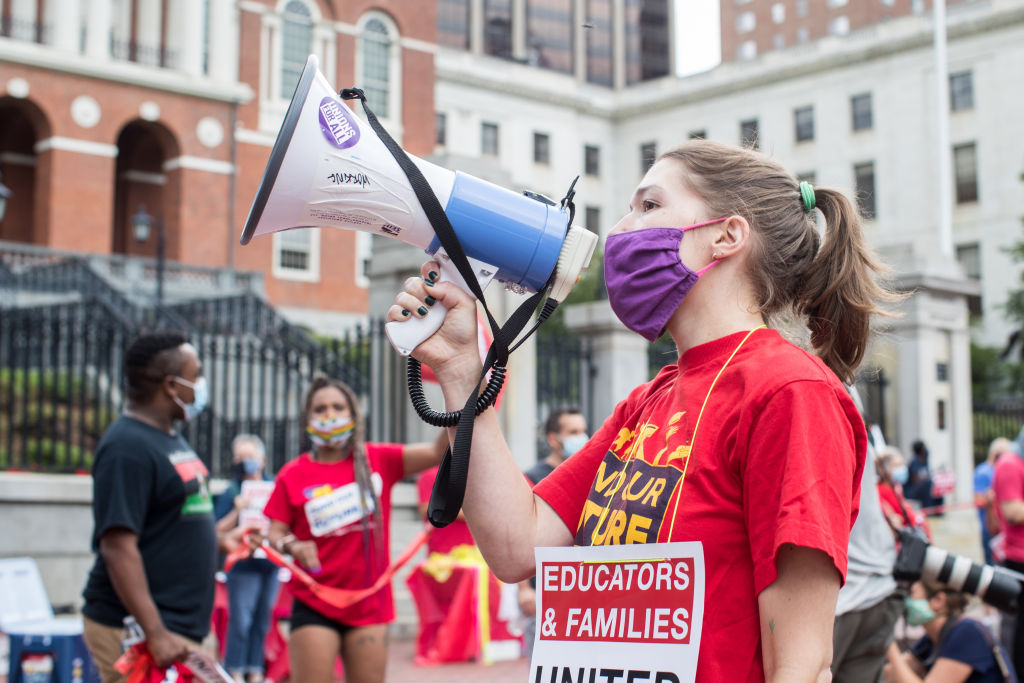
Protesters outside Massachusetts State House in Boston, 2020. (Scott Eisen / Getty Images)
When the pandemic eventually ends, globalization may no longer accelerate at the same rate as before. Particular sectors will remain hard-hit, and tensions between the United States and China will continue, and may even become more menacing (to borrow from Mao Zedong, the making of a global capitalism is not a “tea party”).
But none of this signals the end of globalization, an imminent collapse of capitalism, or an inevitable decline of the American empire. Global business will still be profiting from the commodification of nature and human activity, US corporations will still be a leading force in high tech and business services, the dollar will still be the global currency, and the Federal Reserve effectively the world’s central bank.
The crisis that consequently frames the political opening beckoning the American left isn’t capitalism’s economic but social failures; capitalism’s vulnerability is marked by the destructive impact of its successes on popular needs, aspirations, and fears.