A Decade of Austerity Has Decimated the UK’s National Health Service
Today, the UK's National Health Service is celebrated, rhetorically even by the Right. But for a decade, the NHS has been subject to destructive cutbacks, leading to crumbling facilities, outsourcing, privatization, and staff pay freezes. Britons need to demand better.
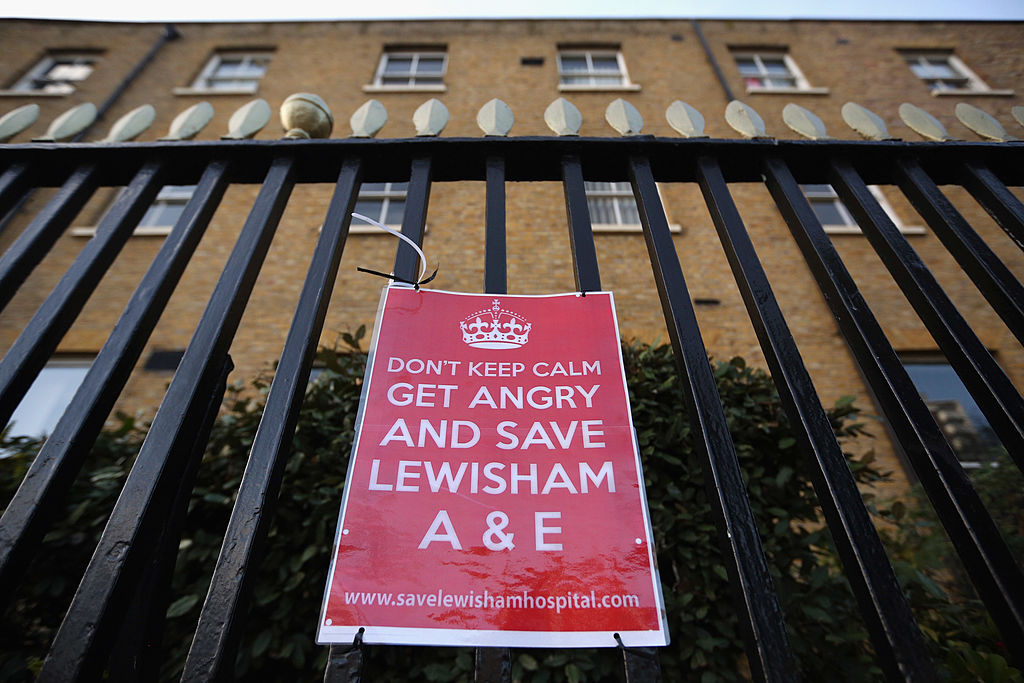
A campaign poster attached to the railings of Lewisham Hospital’s A&E department which is to be downgraded and reduced in size as part of cost-cutting measures. (Photo by Oli Scarff / Getty Images)
A decade ago, when the coalition government began its austerity cuts, spending on the National Health Service (NHS) was supposed to be “protected” from the cuts inflicted on other public services. It is true that average real spending on health and social care increased by 1.4 percent a year. But this is compared with average increases of 3.7 percent a year from 1948 down to 2010.
In other words, government policies implied a halt to any hope of normal improvement and modernization. On top of this, the need for health care rose significantly throughout the decade. First, because the proportion of people aged over seventy-five rose by 12 percent — to 5.4 million in 2019 — and the cost of providing them with care is from three to four times higher than for people under fifty. And second, because austerity impoverished millions of families and simultaneously eviscerated the social security safety net.
By 2019, 14 million people — a fifth of the population — were living in poverty, with consequently deteriorating health. The combination of stagnant funding and rising need led to a decline in access to care, and in its quality. Between 2008–9 and 2018–19, the number of people admitted to hospital every year rose by 20 percent, while the number of people waiting for treatment almost doubled, from 2.2 million to 4.3 million.