Capitalism Is Not the Solution to Urban America’s Problems — Capitalism Itself Is the Problem
The COVID-19 crisis has triggered a fresh round of soul-searching in establishment media outlets about the problems of urban America. Unless we address the root cause of those problems in the structure of our economic system, we’ll never be able to solve them.
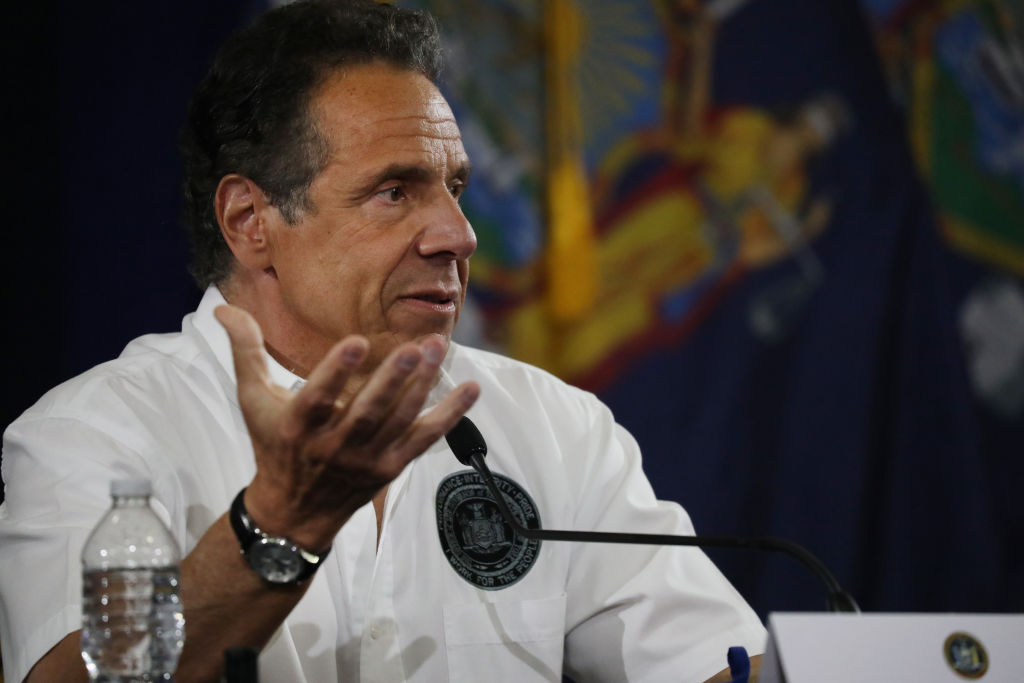
New York governor Andrew Cuomo is joined by Rosie Perez and Chris Rock at a press conference where the two performers helped to promote coronavirus testing, social distancing, and the use of a face mask on May 28, 2020 in New York City.Spencer Platt / Getty
It is quite possible that if and when we collectively emerge from the torments being inflicted by COVID-19, we will find ourselves in a political landscape where the reform of capitalism is very much upon the agenda. Even before the virus struck, there were minor hints of such a transition. Major business leaders who were gathered at Davos, for example, heard that their obsession with profits and market value and neglect of social and environmental impacts was becoming counterproductive. They were advised to take shelter from rising public wrath in some form of “conscience” or “eco-capitalism.”
The lamentable state of society’s public-health defenses against the onslaught of the virus, after forty years of neoliberal politics in many parts of the world, has increased the degree of public agitation. Austerity on anything other than military expenditures or subsidies to supposedly needy — though often filthy rich — corporations left behind a bitter taste, increasingly so after the bank bailout of 2008. In contrast, the collective and state-led measures to address the pandemic that did seem to work have generated more favorable public attitudes towards government.
In his remarkable daily news conferences, New York’s Governor Andrew Cuomo insists that the eventual exit from the current crisis will not only require a reimagining of the economic, social, and political landscape, but will also rest on what he sees as a unique reconciliation between expressions of the popular will and government powers. For those of us who have lived through the recent New York nightmare, this declaration of confidence in the value of state intervention makes some sense.