COVID-19 Shows Why We Must Socialize the Food System
Coronavirus has emphasized a truth we knew before the pandemic: capitalist food systems are irrational and don’t serve human needs. Socialists have to demand a food system based on social and ecological needs — one that can provide food for all.
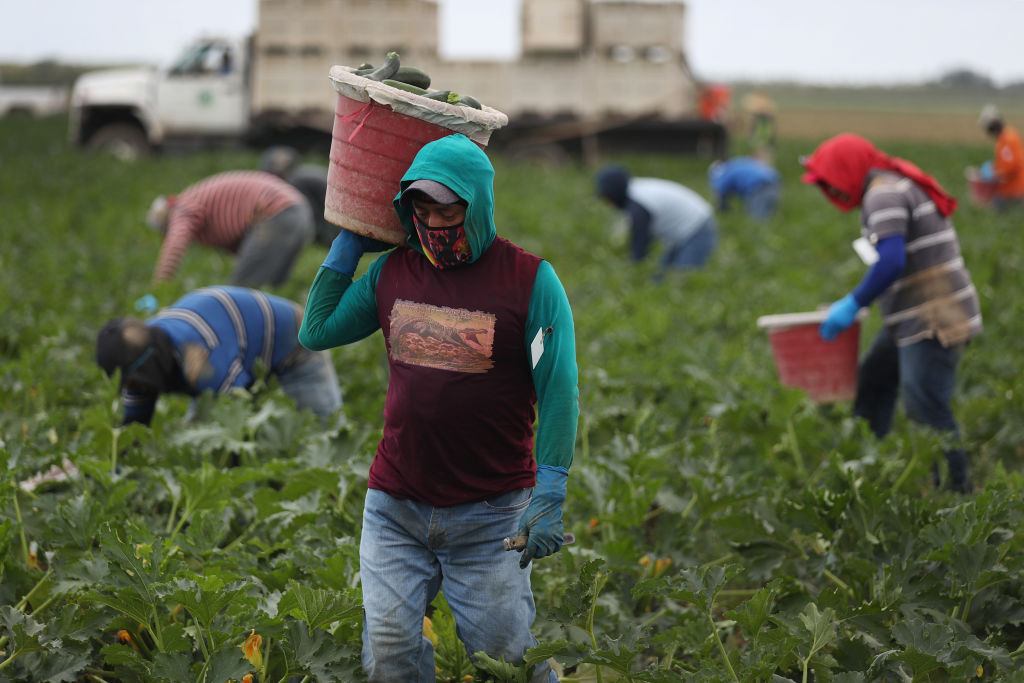
Farm workers harvest zucchini on the Sam Accursio & Son’s Farm on April 01, 2020 in Florida City, Florida. Joe Raedle / Getty
The COVID-19 crisis is revealing a basic contradiction at the heart of capitalism. On the one hand, we have learned that this virus is itself a product of our capitalist agricultural system. As Rob Wallace and coauthors argue, the conditions for virus transmission are rooted in our propensity to clear-cut dense, wild forests — often the reservoirs of viruses themselves — and replace them with homogenous plantation ecologies like palm oil or livestock operations with one species of animal crowded together.
As they put it:
the entirety of the production line is organized around practices that accelerate the evolution of pathogen virulence and subsequent transmission. Growing genetic monocultures — food animals and plants with nearly identical genomes — removes immune firebreaks that in more diverse populations slow down transmission.