The Coronavirus and the Crisis
Coronavirus has exposed capitalism as unable to meet our most basic needs, but that has never been enough for the Left. We need to develop democratic organizations and build our social power, even in the middle of a pandemic, to win.
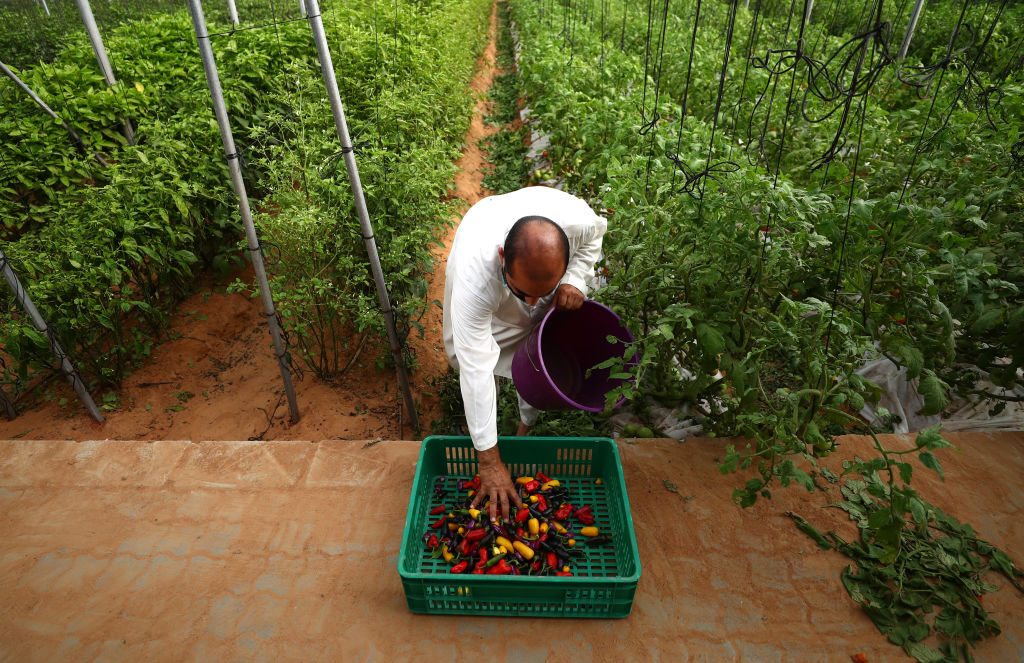
A farmworker harvests peppers at Emirates Bio Farm on Thursday, April 9, 2020, in Al Ain, United Arab Emirates. (Francois Nel / Getty Images)
Crises — not regular downturns but major crises — are characterized by the uncertainty they bring. They interrupt the normal and require yet-to-be discovered abnormal responses to move on. In the midst of these periodic calamities, we don’t know how or even whether we will stumble out of them nor what to expect if they do end. Crises are consequently moments of turmoil with openings for new political developments, good and bad.
Because each such crisis modifies the trajectory of history, the subsequent crisis occurs in a changed context and so has its own distinct features. The crisis of the 1970s, for example, involved a militant working class, challenged the American dollar, and brought a qualitative acceleration in the role of finance and of globalization.
The crisis of 2008–9, on the other hand, involved a largely defeated working class, confirmed the central global role of the dollar, and brought new ways of managing a uniquely finance-dependent economy. Like the previous crisis, the 2008–9 crisis yielded more neoliberal financialization, but this time, it also opened the doors to right-wing populism, alongside an acute disorientation of traditional political parties.