What’s Old for US Labor Is New Again
We’re in the midst of a twenty-first-century Gilded Age. To end it, we can turn to some of the radical policies designed to democratize the world of work, empower a multiracial working class, and reel in the worst excesses of robber barons nearly a century ago.
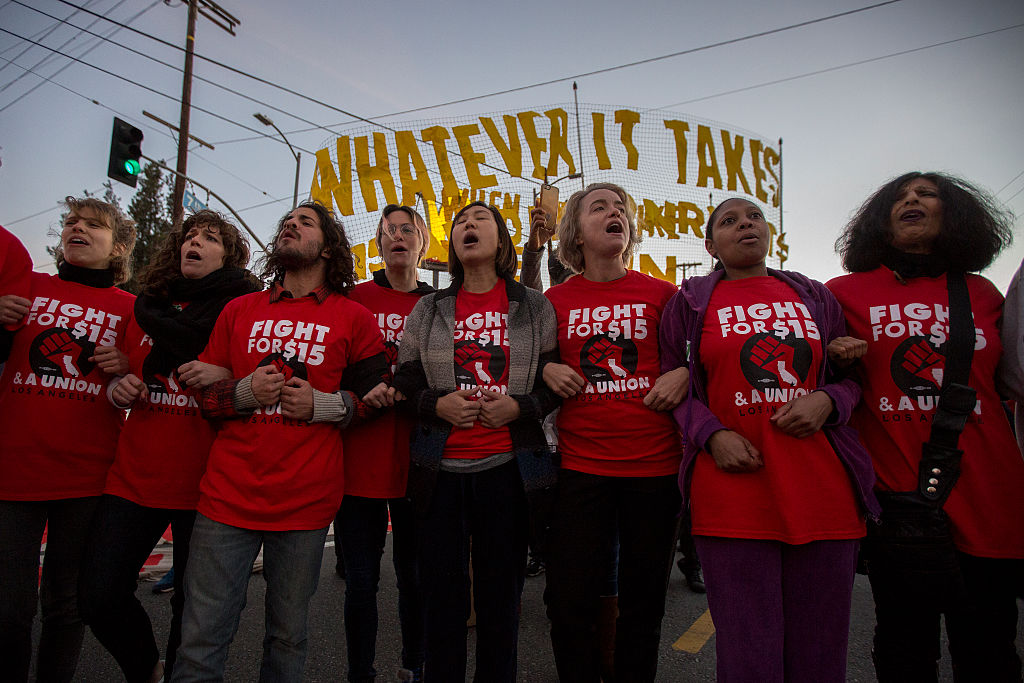
Striking McDonald’s restaurant employees lock arms in an intersection before being arrested, after walking off the job to demand to demand a $15 per hour wage and union rights during nationwide ‘Fight for $15 Day of Disruption’ protests on November 29, 2016 in Los Angeles, California.David McNew / Getty
Everything old is new again. If American workers are ever to emerge from the economic insecurity and political powerlessness that are so characteristic of our second, contemporary Gilded Age, they are likely to rediscover some of the innovations in labor policy and corporate governance that emerged more than a century ago in that first era of social inequality and capitalist excess.
That’s because the structure of capitalism today, and the legal framework that sustains it, evokes many of the same social and economic pathologies that made Americans of that bygone era question the future of US democracy itself.
It has never been just a question of inequality: robber barons then, and the rise of a politically potent billionaire class today. Rather, the two Gilded Ages are similar because at both times a new and disruptive reconfiguration of American capitalism has made necessary a radical set of policies designed to democratize the world of work and empower a multiracial working class.