What Unions Everywhere Can Learn From the Chicago Teachers’ Strike’s Win
The Chicago Teachers Union used strike action to lift up working-class demands that go far beyond traditional collective bargaining. From teachers elsewhere to auto workers, other unions can, too.
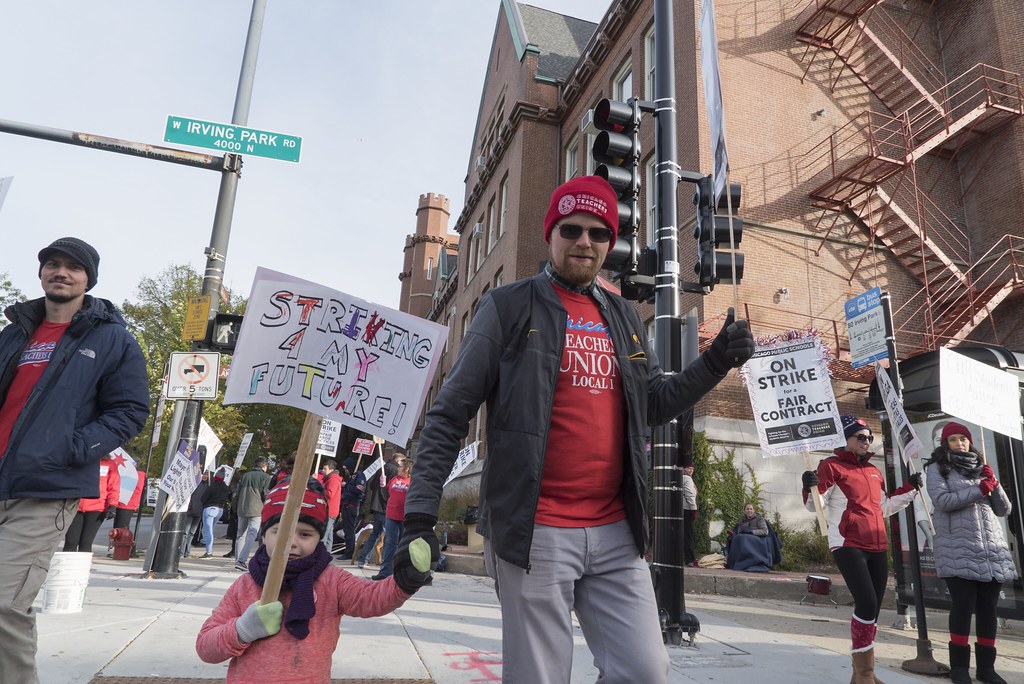
Professional Association of Milwaukee Public Educators / Flickr
As a Chicago Public Schools (CPS) student from first grade through high school, and in my seventeen years of teaching in the system, none of my schools ever had a full-time social worker or nurse every day of the week.
In the first contract the Chicago Teachers Union (CTU) secured in the era of legalized public sector bargaining, in 1967, the language states: “a plan shall be devised to make available to teacher nurses a list of vacancies to which they may indicate their desire to transfer.” That language, providing no firm guarantee of staffing ratios, remained virtually unchanged for half a century. All subsequent contracts until 2019 include no references to bilingual education, dedicated staff and resources for our homeless students, case manager positions for our diverse learner population, sanctuary language to protect undocumented students from ICE, living wages for our lowest-paid paraprofessional members, or a dedicated article on early childhood education. Now, that’s all changed.
After fifty-two years of struggle and an eleven-day citywide strike, we were finally able to secure these critical demands and more. We won 180 case-manager positions, twenty English language program teachers, full-time staff for homeless students, up to $35 million to lower excessive class size, and even nap time for our little ones. This dedicated effort to win seminal staffing supports and educational justice for CPS students did not happen overnight — it’s been a long and protracted fight for the schools they deserve.