Adam McKay Is Mad as Hell
From Will Ferrell comedies to The Big Short, Vice, and Succession, Hollywood’s greatest populist is taking aim at oligarchy — from the hard left.
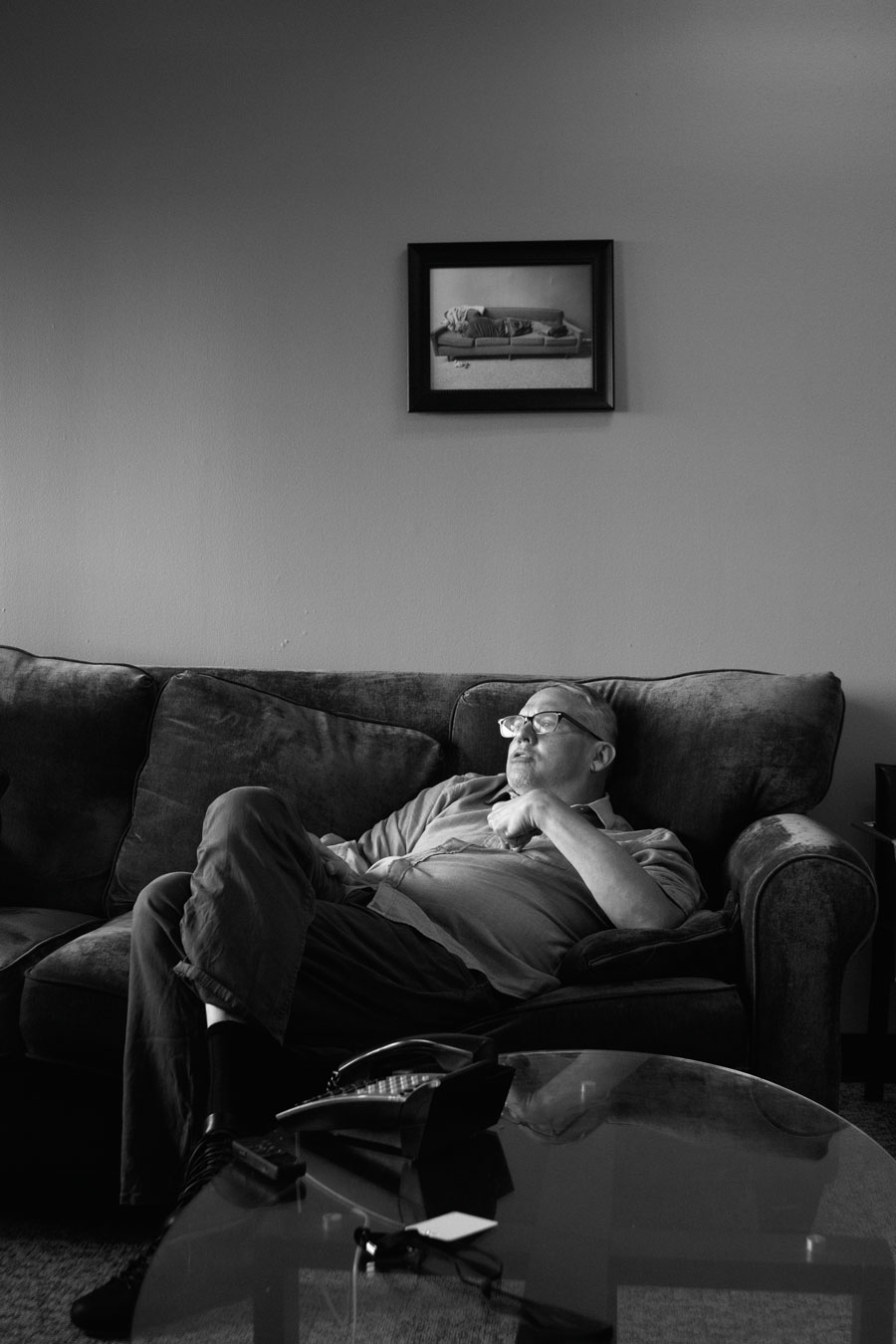
Photography by Lauren Kai Quartey.
Adam McKay is lying on a couch in his office staring up at the ceiling when I ask him how he got to be so angry. It’s a question I’ve been wanting to ask him for a while now: How did the creator of an entire generation of absurdist comedy — Will Ferrell’s most frequent collaborator — decide to go so, well, dark? “I think the answer is really simple,” he says, his head firmly nestled in a pillow (an essential tremor makes it easier for him to conduct interviews this way). “I got very freaked out.”
He runs through the Iraq War, the economic crash, and the bank bailout — a whirlwind series of disasters organized by an unaccountable elite. “It was kind of a perfect stew of, holy fucking shit,” he says. And it all came crashing down just as McKay and Ferrell were dominating the American multiplex. Together, their movies have grossed over $580 million. And that’s only counting the five McKay directed.
His last film, Vice, a Dick Cheney biopic, was met with sharply divided reviews despite acclaimed performances from Christian Bale and Amy Adams. “I just had this fractured feeling that the press was mad that I was stepping in their backyard,” he says. While critics and audiences could handle the collapse of the global economy in McKay’s The Big Short, with handsome and familiar faces to help the medicine go down, Vice’s much grimmer tone — interspersed with jolts of violence like the torture of War on Terror detainees and the bombing of Cambodia — proved to be too much for some. Around the film’s release, McKay attracted controversy for daring to state that Trump is “nowhere near” as bad as the Bush/Cheney presidency. (“By the way, I’ll say it again, if you want to quote me again.”)