The Sudanese Revolution Enters a New Phase
The Sudanese Revolution has won major victories. But it still needs to wrestle control from the military to popular forces.
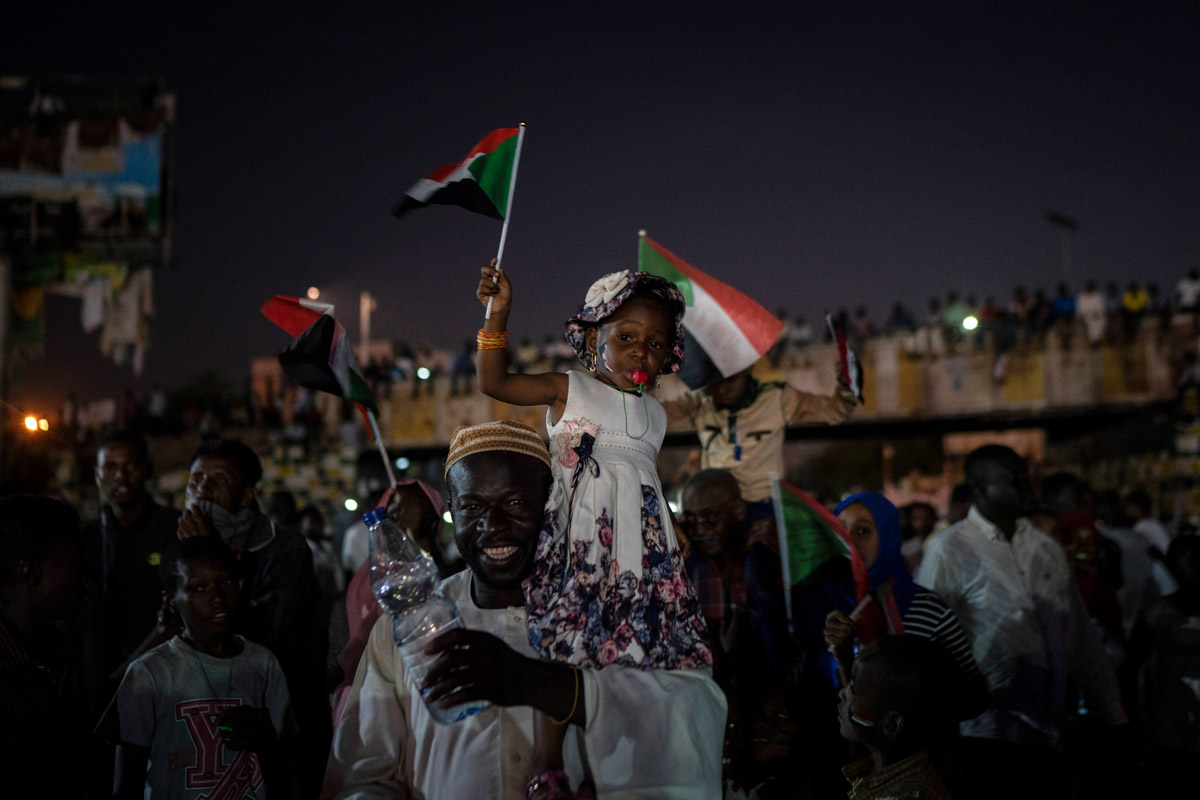
A young girl waves a flag as a large crowd gathers during evening protests against the military junta on April 27, 2019 in Khartoum, Sudan. (Fredrik Lerneryd / Getty Images)
On July 5, jubilant Sudanese masses celebrated the victory they had achieved under the leadership of the Forces for the Declaration of Freedom and Change (FDFC) when the Transitional Military Council (TMC) was forced to backtrack in the wake of the huge demonstrations organized on June 30. The military had to give up their attempt at quelling the mass movement, allow back its free development, including the restoration of the Internet, the movement’s main communication means, and revert to the track of negotiation and compromise after having failed to impose their will by force of arms.
The Sudanese Revolution entered a third phase at that point, after a first phase capped by the fall of Omar al-Bashir on April 11 and a second one capped by the TMC’s retreat on July 5. The FDFC, particularly their main component, the Sudanese Professionals Association (SPA), have proved their full awareness that each phase is more difficult and dangerous than the previous by maintaining the mass mobilization and consolidating it in view of the ongoing as well as future confrontations.
Victories achieved until now have been only partial indeed: they are essentially compromises between the old regime represented by the TMC and the revolution led by the FDFC.