A Chance to Defend Gig Workers’ Rights in California
A new bill in California would end the legal loophole that allows Uber and Lyft to pay drivers incredibly low wages and avoid paying benefits. It’s no surprise that the companies are mobilizing against the law: their business model is based on abusing their drivers.
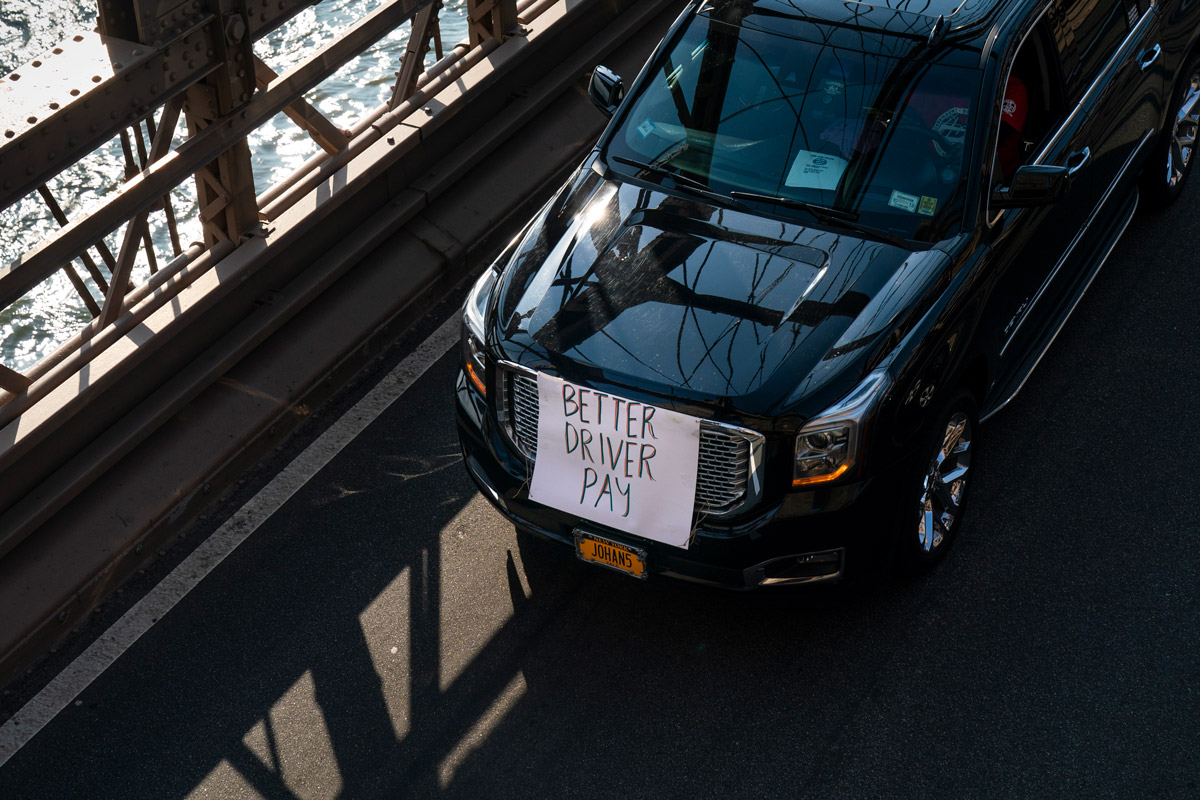
Members of the Independent Drivers Guild drive across the Brooklyn Bridge in protest against Uber and other app-based ridesharing companies on May 8, 2019 in New York City. (Drew Angerer / Getty Images)
Uber and Lyft declared war on their California drivers this week. The companies’ drivers have been protesting low wages and abhorrent working conditions in the gig economy, and in California, supporting a bill expanding gig workers’ rights which could be signed by Governor Gavin Newsom in the next two weeks. In response to the likely passage of this bill, Assembly Bill (AB) 5, Uber, Lyft, and other companies have already pledged to spend nearly a hundred million dollars launching a 2020 ballot measure campaign that would effectively invalidate the rule — and plunge gig workers back into the unregulated abuse and exploitation they currently face.
Workers of all kinds across California should support gig workers and the passage of AB 5, while getting ready to take the fight to the next phase by opposing the companies’ ballot measure. And anyone who supports AB 5 would do well to examine Bernie Sanders’s proposed sweeping workers’ rights legislation, including a federal law that will accomplish what AB 5 would accomplish in California.
What Is Ab 5?
AB 5 closes a major loophole in US labor law, employee misclassification. Major protections in US and California labor law — including minimum wage and overtime laws, the right to join a union, workplace safety protections, and more — cover most people classified as employees. However, many companies, including gig economy darlings like Uber and Lyft — but also many more “traditional” companies — misleadingly classify their workers as “independent contractors” to get around these laws.