To Save Democracy, We Need Class Struggle
The historical record is clear: democracy was only won when poor people waged disruptive class struggle against the rich. We'll need more of it to save democracy today.
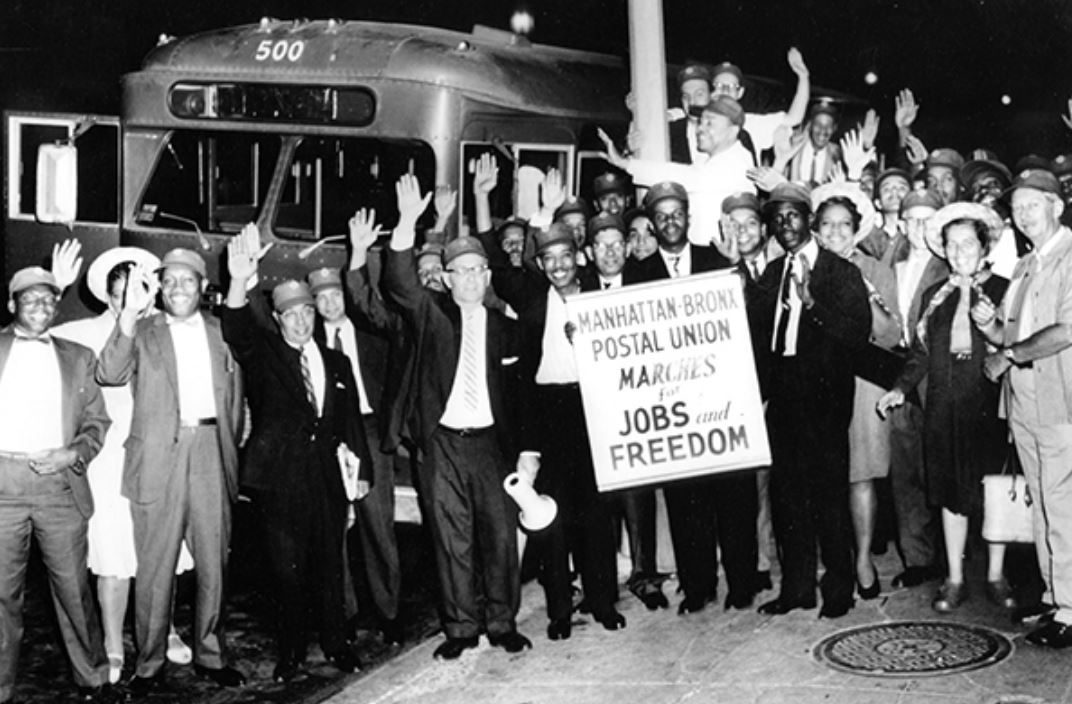
New York postal workers boarding a bus to the March on Washington for Jobs and Freedom in New York in 1963. Tamiment Library and Robert F. Wagner Labor Archives / New York University
Democracy, they say, is in crisis. The Washington Post ran a Super Bowl ad warning us that “Democracy Dies in Darkness.” Political scientists Daniel Ziblatt and Steven Levitsky have published a book titled How Democracies Die. And Larry Diamond, éminence grise of democracy scholarship, has diagnosed a global democratic recession.
It is not my aim to pour cold water on these kinds of concerns. There is much in recent history to fret about. Yet a single-minded focus on contemporary events can mislead. In studying only today’s backsliding, we risk ignoring the forest for a few Trump-shaped trees.
To understand democracy — to defend it and to deepen it — we should examine its long history rather than obsess about recent headwinds. In a recent article published in the American Journal of Sociology, I attempt to do just that. My research suggests that democratic progress over the last 150 years is the fruit of the changing character of class struggle over the state. Democracy has its origins in the capacity of the poor to disrupt the routines of the rich.