Black Political Life and the Blue Lives Matter Presidency
To meaningfully confront mass incarceration and police violence, the Left must move past race reductionism by recognizing the complexities of black political life.
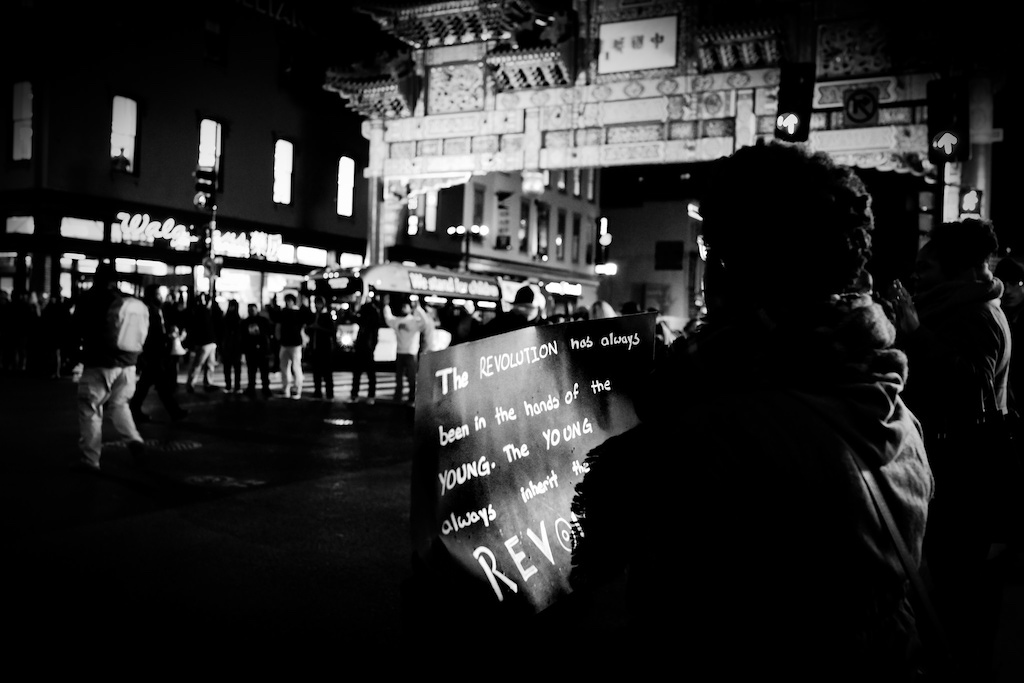
A Black Lives Matter rally in Washington DC. Victoria Pickering / Flickr.
My 2017 Catalyst article, “The Panthers Can’t Save Us Now,” was addressed to a specific conundrum within contemporary left politics and anti-policing struggles in particular: that is, the strategic problem of building a counterpower capable of winning in the context of renascent black-nationalist thinking, sheepishness on the Left about class analysis, and a pervasive reluctance to think about black political life with much sophistication.
In a sense, the article was less about the historical Black Panther Party for Self Defense than the dangers of the sixties nostalgia that afflicts contemporary struggles, namely the revival of racial essentialism, the colonial analogy, and vanguardist posturing. Such notions were limited as a means of advancing black political life during the sixties, and inasmuch as they preserve the fiction that society-wide, revolutionary changes can be won either by the actions of numerical minorities or sectarian tendencies, they are ill-suited to the challenges we face today.
My argument then and now is that Black Lives Matter, and cognate notions such as the New Jim Crow, have been useful in galvanizing popular outrage over policing and mass incarceration, but these same banners have simultaneously enshrouded the very social relations they claim to describe and led away from the kind of politics — one predicated on building broad, popular power — that is necessary to roll back the carceral state. That 2017 article was conceived as an historical materialist antidote to racially reductionist thinking and attempted to excavate the origins of black ethnic politics as we know it.