A Political Revolution for Labor
Bernie Sanders's political revolution can't be limited to election campaigns — it must be brought into our workplaces and unions too.
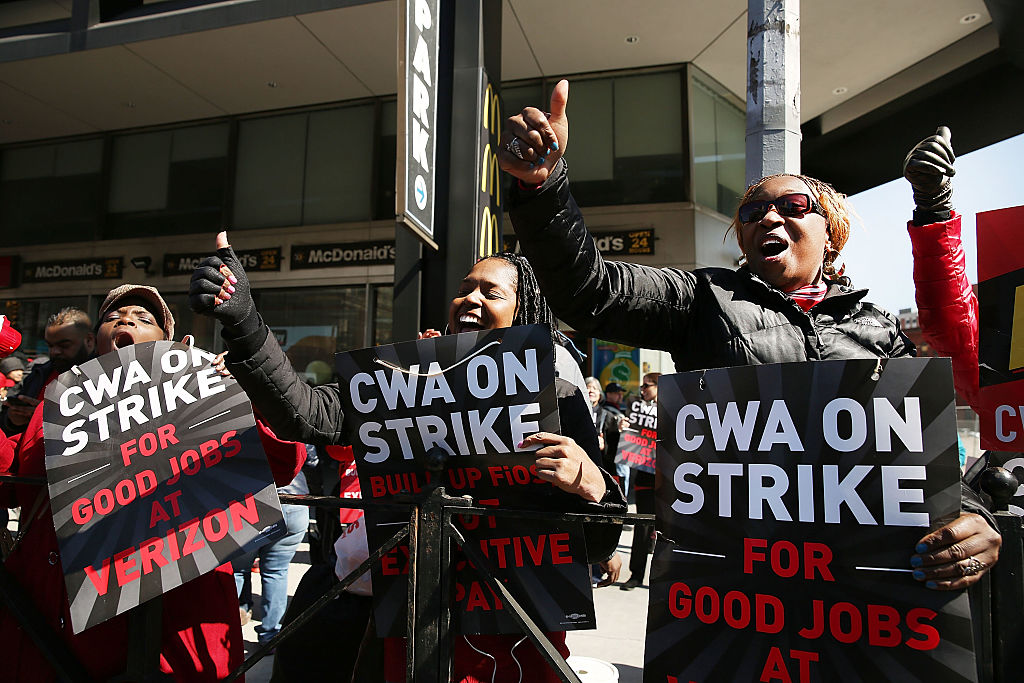
Hundreds of Verizon workers strike outside of the telecommunications company’s Brooklyn offices on April 13, 2016 in New York City. Spencer Platt / Getty Images
The term “political revolution” is an odd one. Bernie Sanders never said that voting for him or building his campaign would overthrow capitalism (the traditional meaning of “revolution” in the socialist movement). The idea was radical but vague. It was rightly inspirational while what was actually asked of us was within the sphere of voting and elections, and in the Democratic Party at that.
Let’s define “political revolution” very broadly as left electoral campaigns that raise transitional demands and seek to enfranchise the disenfranchised. Bernie’s campaign, as well as those of followers such as Alexandria Ocasio-Cortez, called for radical reforms that the US system could grant — Medicare for All, free public college — but which it is profoundly unwilling to. Raising the demands raises the question “why not?” and lays the blame squarely on Bernie’s “billionaire class.”
My argument here is a simple one: If we want a powerful movement, workers have to fight their employers not just at the ballot box but at the workplace, too. These two kinds of struggle can complement each other; union fights, in particular, pose clear class battles that raise consciousness. In addition to this year’s electrifying teacher strikes, we can learn from three other large-scale union victories that took place in the year before Donald Trump was elected. Those victories happened where we might least expect them: in the old, blue-collar economy, where unions are down to 6.5 percent of the workforce and workers are said to be on their way out. Yet at Chrysler, Verizon, and a huge Teamster pension fund, thousands of union members organized to put a stick in management’s eye.