Standing Up to Merkel
- Adam Baltner
We talk to Die Linke MP Sahra Wagenknecht about her controversial Aufstehen initiative and the future of the German left.
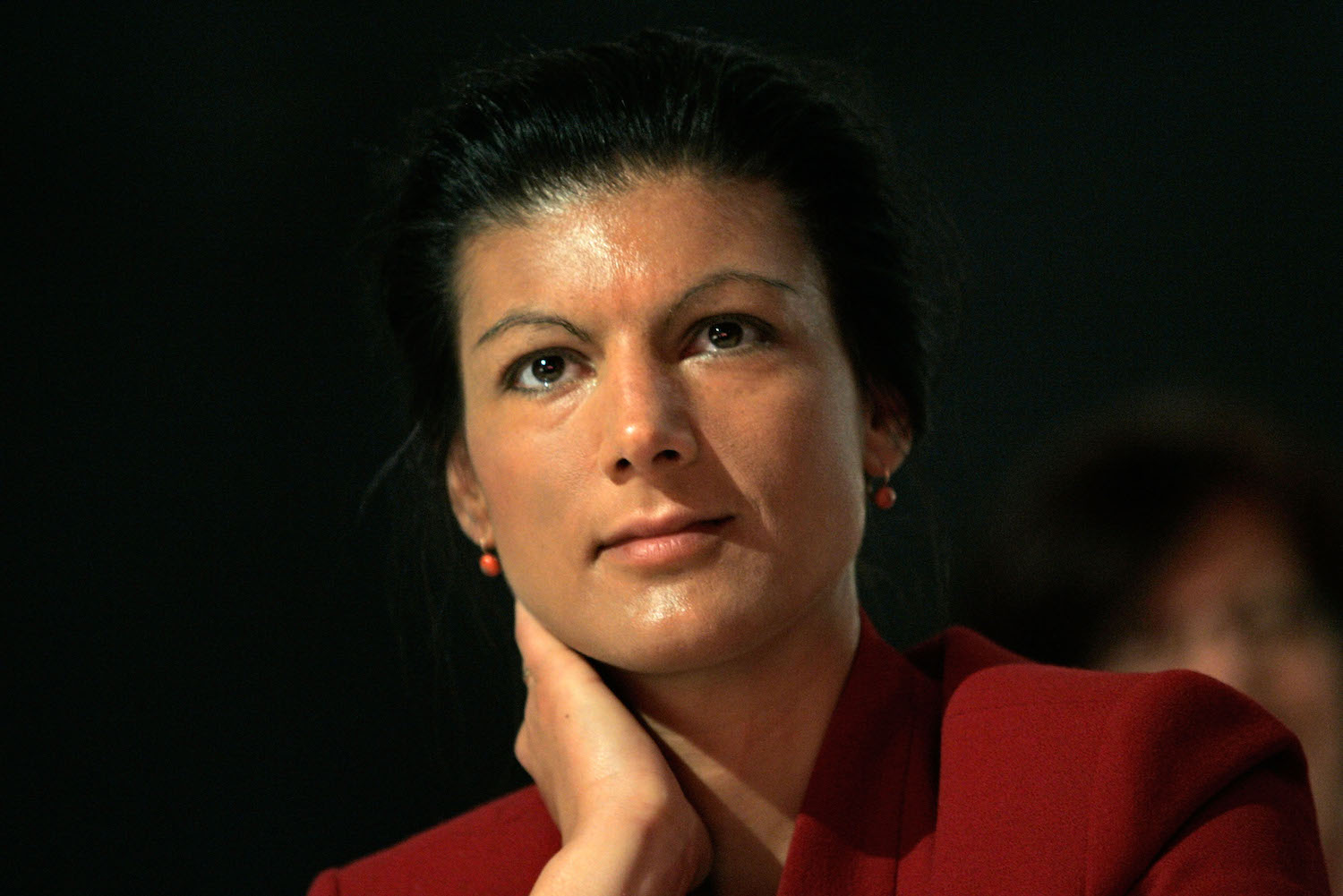
Sahra Wagenknecht looks on at Die Linke’s party congress on May 24, 2008 in Cottbus, Germany. Steffen Kugler / Getty
Sahra Wagenknecht is used to controversy. Beginning her political career in the chaotic period that followed German reunification in 1990, she joined the Party of Democratic Socialism (PDS) in her twenties and was for several years a prominent member of its Communist wing.
She moved from the European Parliament to the Bundestag in 2009 shortly after the PDS joined with a left-wing split from the Social Democrats to form Die Linke, and has served as cochair of the party’s parliamentary group since 2010. Though she has proven to be polarizing in Die Linke and the wider left, on a national level she remains the party’s best-known public figure and most popular politician, with one-quarter of German voters stating they would consider voting for an electoral list headed by Wagenknecht. Her position as parliamentary group co-chair and her frequent media appearances make her Germany’s most prominent left-wing politician.
She has attracted renewed controversy since 2016 by criticizing Angela Merkel’s refugee policy. She has argued that the government failed to provide the necessary funds and infrastructural support to prevent the refugee influx from overburdening local governments and labor markets, thereby exacerbating social tensions in an already polarized society. These statements have generated intense controversy within her own party as well as the wider political sphere, with many accusing her of making concessions to the right as part of a wider attempt to win back working-class voters who have drifted to the far right Alternative für Deutschland (AfD).