Time For Unions To Step Up On Medicare For All
The labor movement can't afford to keep clinging to the remnants of its private welfare state.
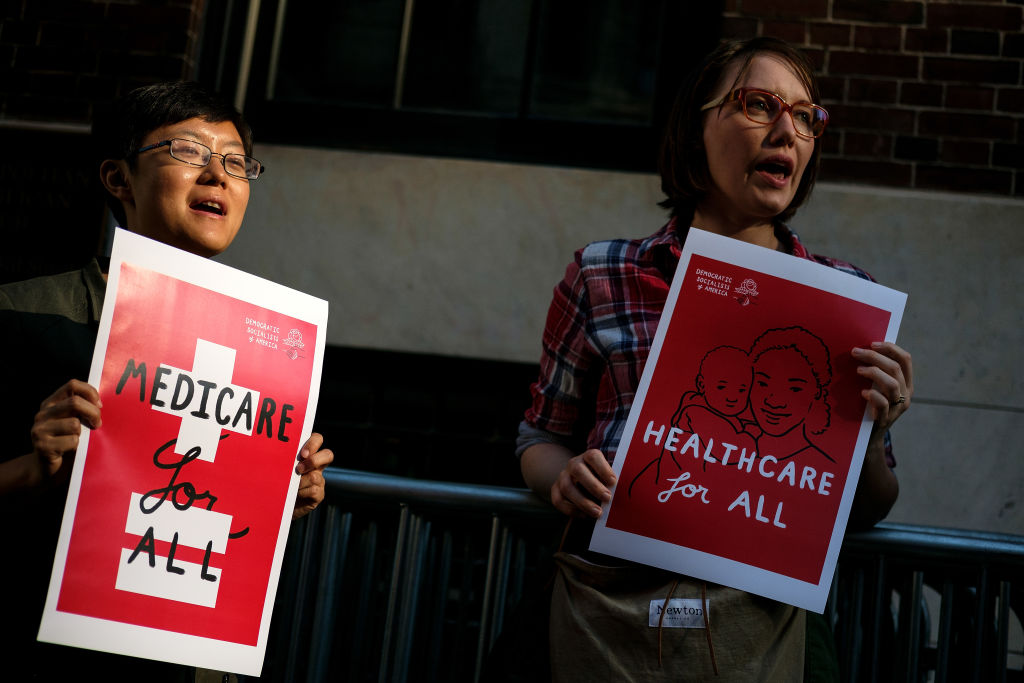
Activists rally against the GOP health care plan outside of the Metropolitan Republican Club, July 5, 2017 in New York City.Drew Angerer / Getty
There are still those in the labor movement who believe that unionists should oppose single-payer Medicare for All because good, union-negotiated benefits strengthen member loyalty and help to organize new members. This misunderstanding persists because the provision of health care is deeply embedded in the employment relationship. More than 150 million people in the United States receive employer-provided health care insurance. This accident of history is a result of the post–WWII defeat of the Left in the US and the subsequent constraints on militant trade unionism. Unions and their allies had to construct “second-best solutions” in the face of unchallenged corporate power.
While unions throughout the industrialized world led the fight to make health care a right for all, unions in the United States were instrumental in setting the terms for a “private welfare state” that organized the provision of public goods through private employers. Health care became a benefit rather than a right.
Today, bargaining for health care has become unsustainable. Rather than being a positive perk of union membership, health care has become the biggest cause of strikes, lockouts, and concession bargaining as the costs continue to rise much faster than wages and the general rate of inflation. Workers often trade wage increases and other benefits to maintain health coverage only to be faced with the same dismal co-pays, deductibles, and limited networks that characterize all private health insurance plans.