When Workers Fight Back
Workers resist exploitation, even in the worst circumstances. Historian Annelise Orleck spoke with 140 of them, from garment workers in Cambodia to Walmart workers in the US.
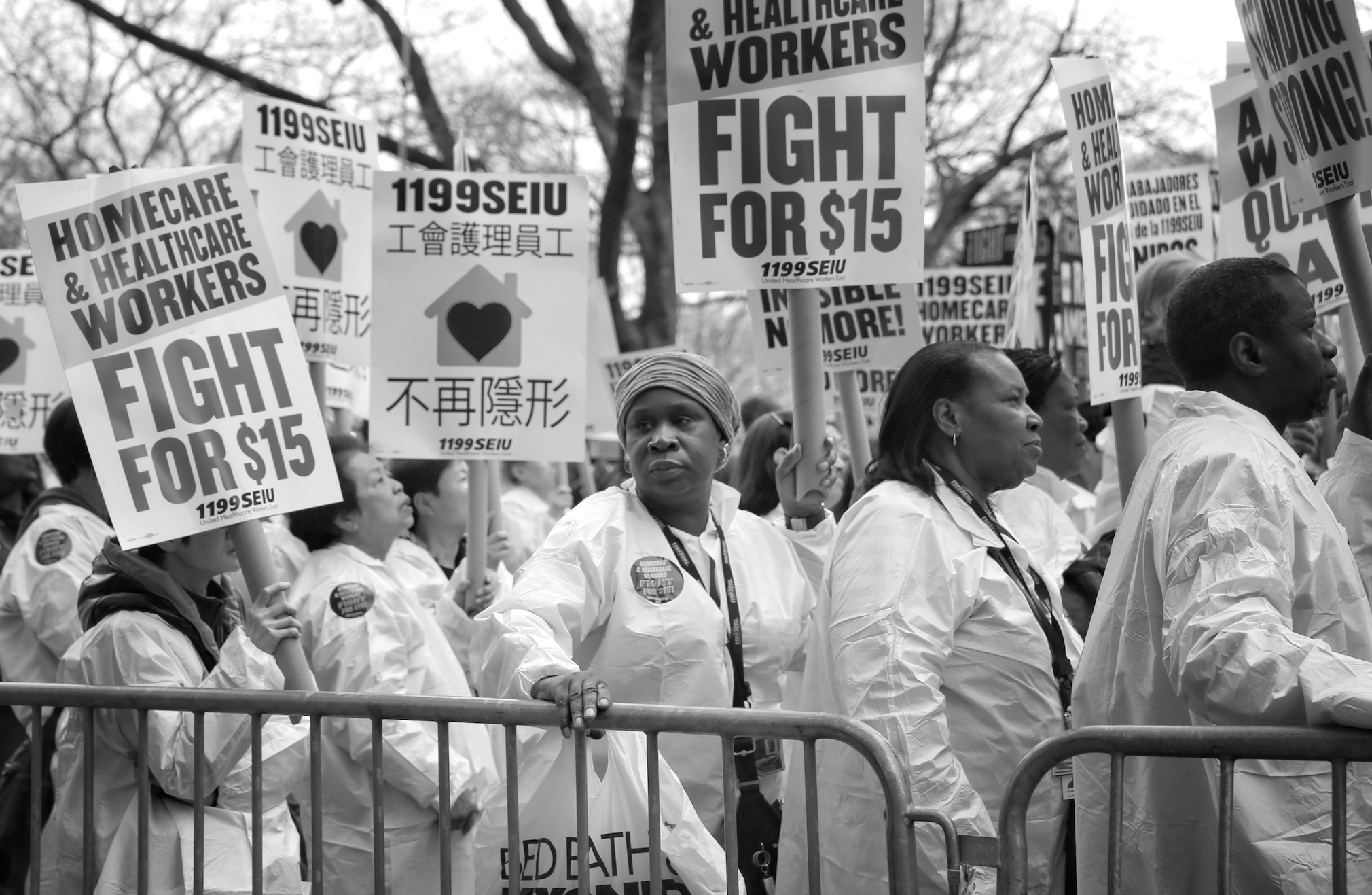
Home health care workers gather for a living wage march in Manhattan on April 15, 2015. Liz Cooke
We’re used to hearing stories about labor’s decline. Janus is going to kill public sector unions. Workplaces are harder to organize than ever. Union density is at an all-time low.
But if there is cause for optimism, it is that workers still resist exploitation, even in the worst circumstances. In the United States and around the world, workers are organizing for higher wages, better working conditions, and respect in the workplace. Garment workers are striking in Cambodia, berry pickers are walking off the job in Mexico, McDonald’s workers are forming international networks. Despite the growth in right-wing movements and governments, the organizing continues, even in places where labor activists are beaten and jailed, and sometimes worse.
In her new book, “We Are All Fast-Food Workers Now”: The Global Uprising against Poverty Wages, historian Annelise Orleck provides a dose of optimism through her interviews with some of these workers. In all, she talked to 140 workers: in Bangladesh and South Africa and Cambodia; in the United States and the Philippines and Morocco — berry pickers, garment workers, small farmers, fast-food workers, adjunct professors, airport workers, home health care aides.