Staging a Dead Peace
The new play "Oslo" disguises colonial domination as savvy conflict resolution.
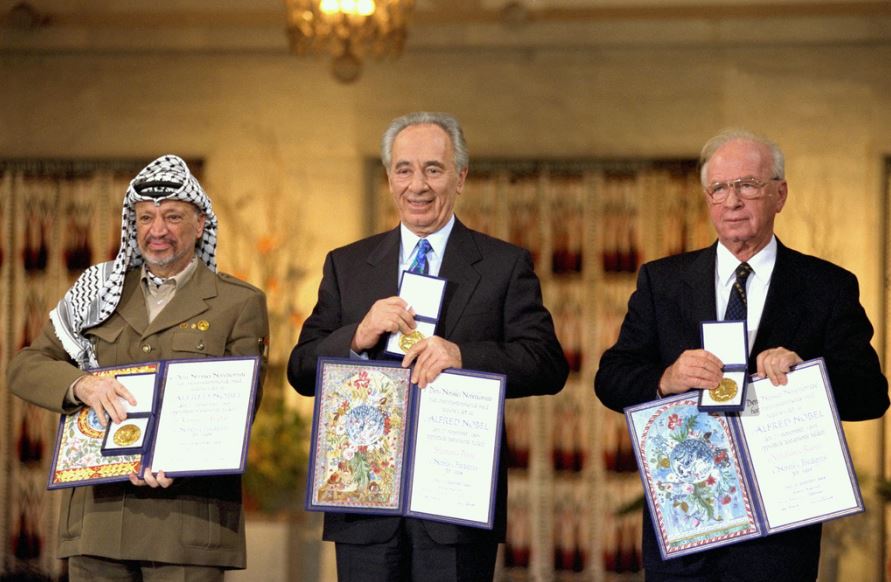
PLO chairman Yasser Arafat, Israeli foreign minister Shimon Peres, and Israeli prime minister Yitzhak Rabin receiving the Nobel Peace Prize in Oslo in 1994. Wikimedia Commons
I was recently dragged to see the Tony-award-winning play Oslo at the Harold Pinter Theater in London. It portrays the back-channel negotiations that produced the Oslo Accords, the 1993 agreement struck between the Palestine Liberation Organization (PLO) and the state of Israel. I really didn’t want to go. Friends who had already seen it confirmed the impression I got from reviews: “It’s not for us,” one of them said.
I expected to be disappointed. But what really struck me about Oslo was what it actually seeks to achieve: an earnest and unfazed rehashing of the Oslo negotiating formula. That formula is to assume parity between the occupier and the occupied and treat both as equal. Basically: advocate that “the wolf will live with the lamb.” What Oslo depicts, nearly twenty-five years after the events it dramatizes, is not peace at all. It’s the reverse: an entrenchment of Israeli conquest and mastery.
The play is driven by a single-minded preoccupation with diplomatic secrecy, intrigue, and risqué experimentation in conflict resolution. It also employs a strained form of ironic, diplomatic humor and quirky Norwegian-inflected self-congratulations. This whole façade is there to dramatize the notion that it’s more important to get enemies talking than to worry about the outcome of their negotiations. Further, if peace fails, it’s because of ancient enmities rather than the conditions beyond the negotiating table.