From Revitalization to Dispossession
On the twentieth anniversary of New Labor Forum, Steve Fraser reflects on organized labor’s hopes and disappointments over the last two decades.
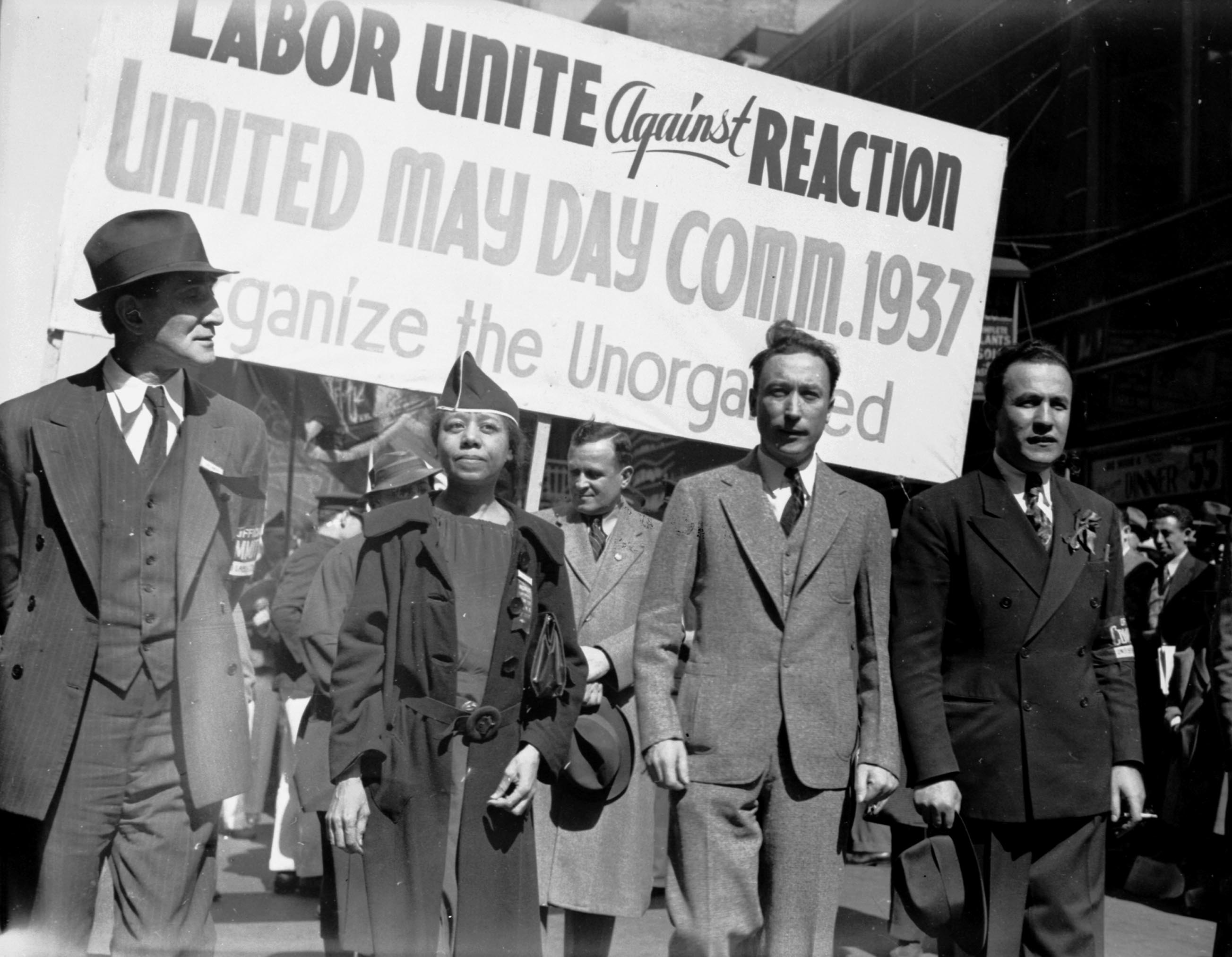
Edith Ransom and Charles Zimmerman (center) of ILGWU Local 22 march with others in the 1937 May Day parade.Kheel Center / Flickr
New Labor Forum’s (NLF) first issue appeared in 1997, but its birth pangs — labor pains if you will — began two years earlier.
In 1995, the American labor movement underwent a rare change in leadership, as the “New Voice” slate took charge of the AFL-CIO. To many at the time, it seemed to signal something more important and far-reaching than a routine changing of the guard.
I remember writing a letter, along with my friend and labor historian Nelson Lichtenstein, to the New York Review of Books welcoming this unexpected upheaval at the top because we thought it might refresh not only a weakened labor movement then in deep retreat but also inspire hope that such a revitalized labor movement might bring back broader movements for social justice and equality. A variety of intellectual and political luminaries, including such unlikely brothers as Arthur Schlesinger Jr and Noam Chomsky, cosigned the letter, illustrating the breadth of hope excited by John Sweeney’s election.