Revolt of the Elites
Patricio Guzmán’s The Battle of Chile captures the class war that culminated in Salvador Allende's overthrow 44 years ago today.
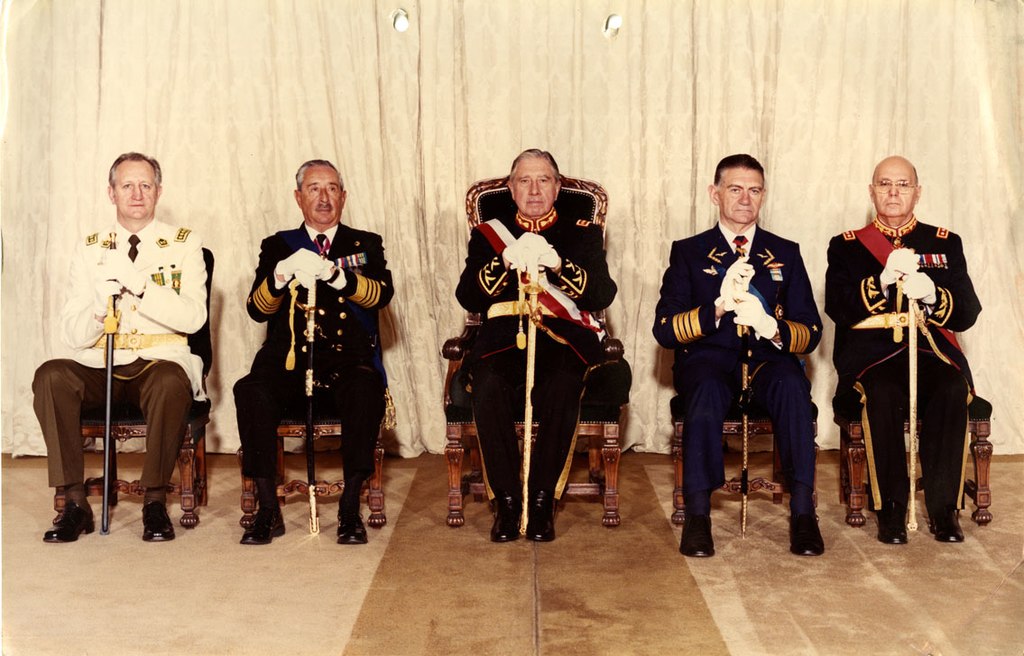
Members of Chile’s government junta in 1985, twelve years after the coup. Wikimedia Commons
The first segment of Patricio Guzmán’s three-part documentary The Battle of Chile ends with an attempted coup — the tanquetazo of June 29, 1973, when the most reactionary elements of the Chilean military used tanks to shell La Moneda, the national palace that had served as the headquarters of socialist president Salvador Allende since his election three years earlier.
We watch the shelling through the lens of Argentine cameraman Leonardo Henrichsen. He stands impossibly close to the tanks and their shouting officers, filming from just paces away in the scampering newsreel style that gives Guzmán’s film so much of its anxious power. The camera maneuvers like a boxer. Henrichsen, the cameraman, seems torn between fight and flight.
Hordes of civilians have fled the streets, leaving the tank commanders exposed on one of Santiago’s broad avenues — without the gravitas of a united military behind them, their rebellion is feeble, their actions undeniably criminal. Finally, one irate officer (since identified as Corporal Héctor Bustamante, who died awaiting trial in 2007) raises his pistol to fire directly at the camera — or rather, at Henrichsen, who holds it.