At a Time of Crisis in the Supply Chain, Workers Have Enormous Power
The solution to the supply chain crisis is not rocket science: build unions, raise living and working standards, and shorten logistics workers’ hours at higher pay.
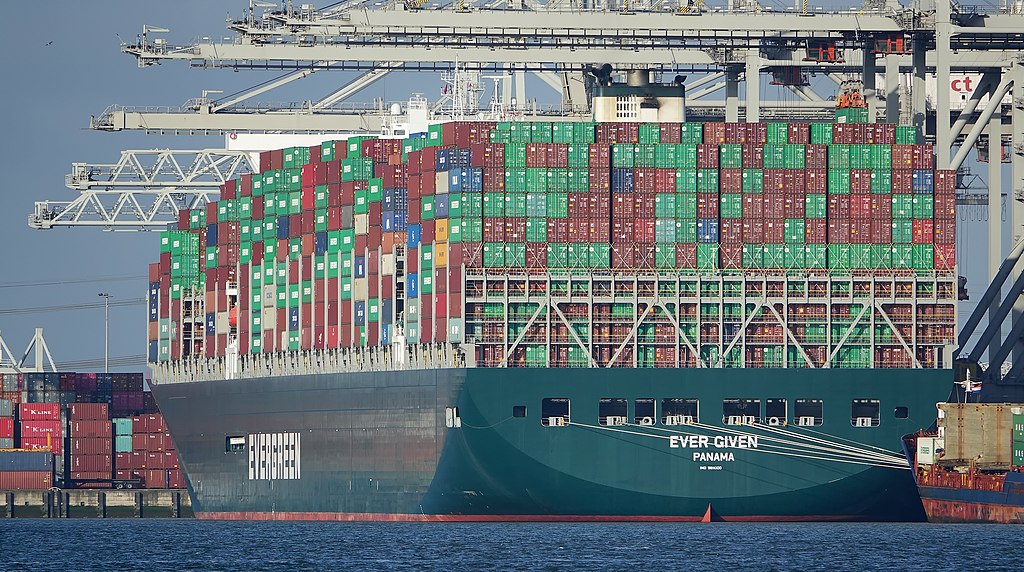
The Ever Given container ship caused a global supply chain crisis when it got stuck in the Suez Canal for six days in March 2020. (kees torn / Wikimedia Commons)
A global spectacle unfolded in March when the giant container ship Ever Given, bound for Rotterdam from Malaysia, got stuck in the Suez Canal for six days, stopping 150 ships in one day and backing up shipping traffic at an estimated cost of $1 billion (£750 million).
But the Ever Given snafu was no isolated incident. On the other side of the world, by early November, some seventy-seven container ships were stranded at sea outside the ports of Los Angeles and Long Beach, California, while almost a third of the ships in dock had to wait five days or more to be unloaded. Bloomberg Quint declared that a “global supply-chain crisis” was “pushing warehouses to capacity and forcing logistics managers to scramble for space.” The Institute for Supply Management reported that manufacturing activity was down as “supply chain challenges continued to weigh on U.S. manufacturers in October.” What’s going on?
The immediate cause of the supply chain crisis that began in 2020 was a sharp increase in consumer spending on durable goods as COVID-19 restrictions led people to buy more goods for home and fewer services in the stores, theaters, bars, and restaurants outside. A lot of those goods came from abroad and, in any case, had to be moved around the country.