Not All Labor Law Reforms Are Created Equal
Two major pieces of labor law legislation, both rooted in the concept of “sectoral bargaining,” are now being weighed in California and New York. California’s would represent a genuine advance for low-wage workers; New York’s would be a disaster.
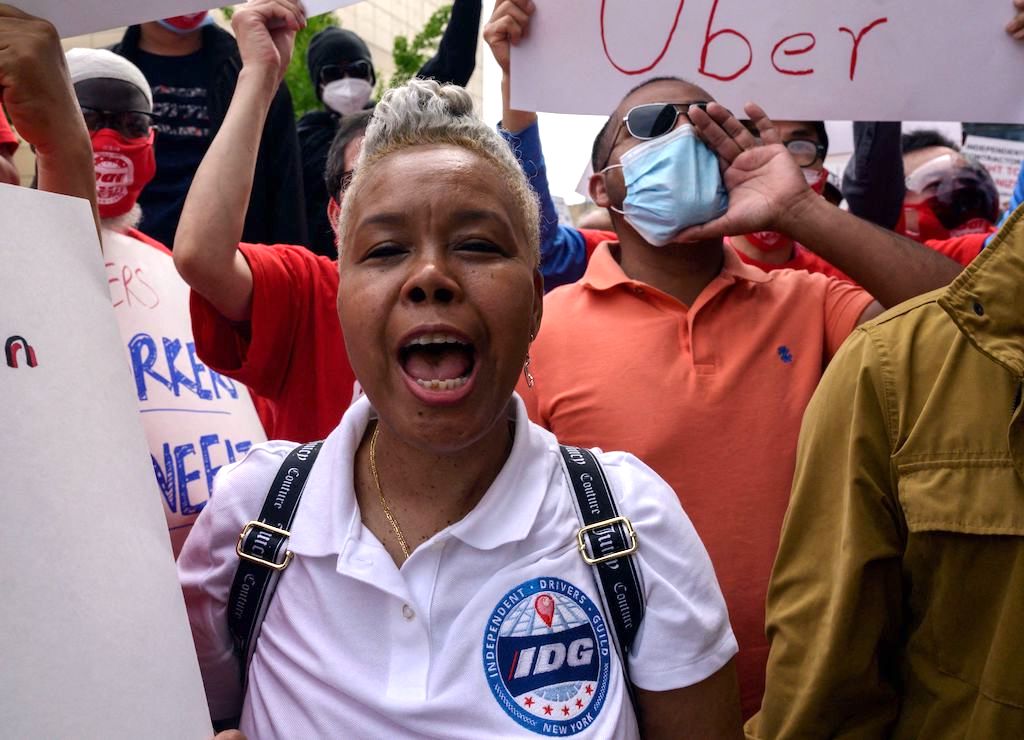
Rideshare drivers and delivery workers hold a rally outside the offices of Lyft and Uber in Long Island City on June 2, 2021. (Ed Jones / AFP via Getty Images)
New York and California are the two largest blue states in the country, both with labor movements of creativity and power. Since congressional passage of the Protecting the Right to Organize (PRO) Act remains a long shot, much pro-labor legislative action still remains with the nation’s handful of progressive states, where the template for a new union movement — and the state laws sustaining it — is being forged.
So it’s important that in New York and California, some unions are pursuing two different legislative initiatives seeking to leverage the support they enjoy among elected officials in each state. At first glance both look good. But look closer and you see that one is an utter disaster, the other a social innovation with much progressive promise.
A Labor Law Reform Only Gig Companies Could Love
In New York, legislation that purports to create collective bargaining rights for gig-economy workers is being introduced in the State Senate, pushed by the International Association of Machinists and Aerospace Workers, and the Transport Workers Union, with support from the New York AFL-CIO.