John le Carré Captured the Paranoid Mood of the Cold War
John le Carré was the Cold War's finest novelist. He was no leftist, but Le Carré's portrayals of the British security establishment offer an enduring insight into the mindset of the ruling class.
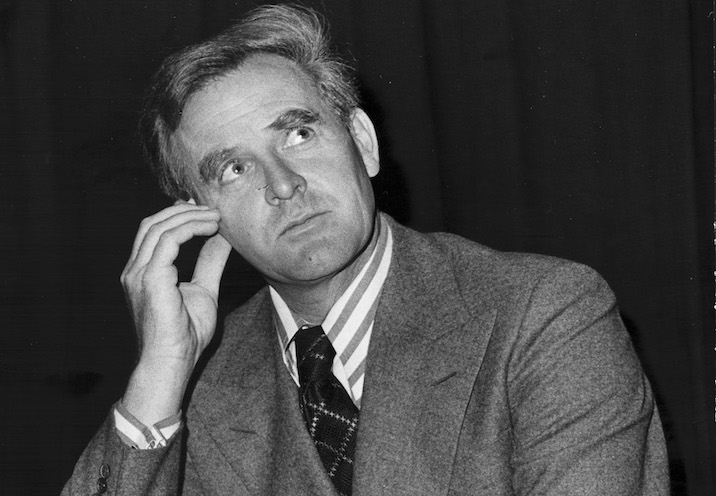
John Le Carré. (RDB / Getty Images)
John le Carré was the best novelist of the Cold War. His peers are Orwell, Koestler, and Vonnegut, quite as much as Fleming and Deighton. The literary novelists that critics lionized over le Carré mostly maintained the liberal separation of art and politics, but le Carré covered it all.
The Berlin Wall towers over his breakthrough third novel, The Spy Who Came in From the Cold (1963), chasing the Checkpoint Charlie standoff; the Cuban Missile Crisis worries at The Looking Glass War (1965); the counterculture crowds A Small Town in Germany (1968); the Cambridge Spies haunt Tinker Tailor Soldier Spy (1974); Vietnam bespatters The Honourable Schoolboy (1977); and the Second Cold War chills Smiley’s People (1980).
If, by le Carré’s magnum opus, A Perfect Spy (1986), the political had become the personal, spying and double agency metaphors for Oedipal conflict, 1990’s The Secret Pilgrim was le Carré’s own “end of history” after the Wall came down, a pyrrhic victory lap.