Don’t Blame Polarization
A discussion on American partisanship, political dysfunction, and why it’s not our passions that are the problem — it’s the Constitution itself.
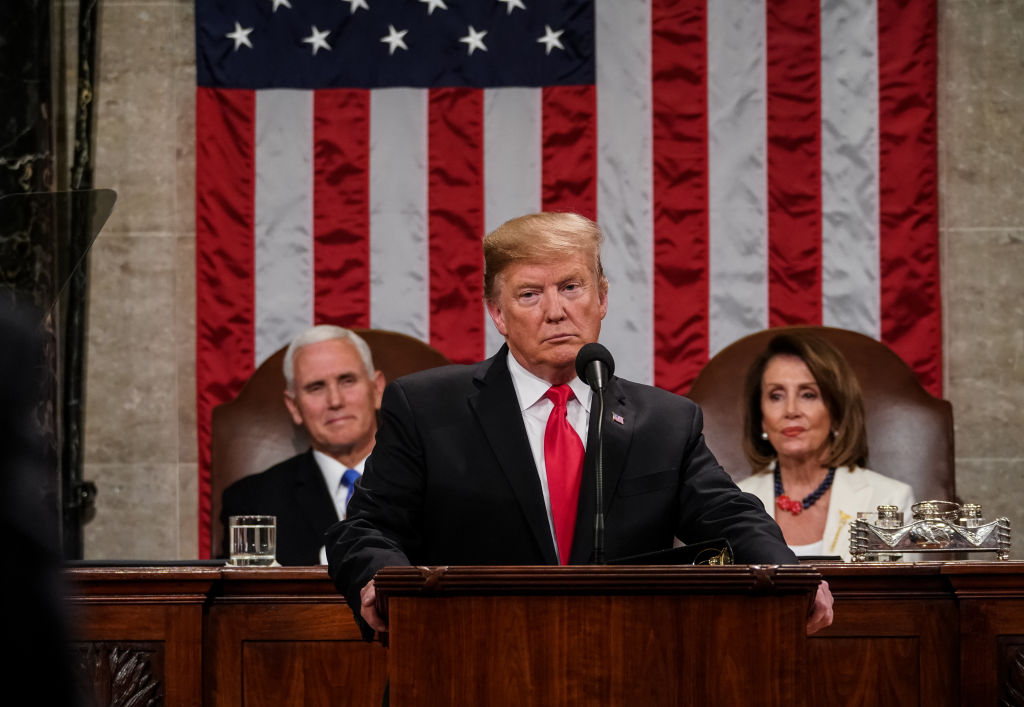
President Donald Trump, with Speaker Nancy Pelosi and Vice President Mike Pence looking on, delivers the State of the Union address in the chamber of the US House of Representatives at the US Capitol Building on February 5, 2019 in Washington, D.C.Doug Mills-Pool / Getty
Bhaskar Sunkara
What I really love about Why We’re Polarized is that it’s a 2020 political book that isn’t just narrowly focused on Donald Trump. It’s about far deeper, underlying trends, and about the structure of the American political system.
Ezra Klein
Yeah, absolutely. One of the moves I tried to make in the book, and that I try to make in my journalism more broadly, is to get people to stop reducing politics to a narrative about individuals.
The master story right now of American politics, to me, is certain identities becoming more firmly entrenched, locking people much more firmly into a sense of political place than, say, fifty years ago, and a large gap between the parties.