How We Lost Michigan
In 2016, Bernie won a major upset in Michigan, thanks in part to a groundswell of support in the state’s rural areas. In 2020, he lost every county in the state — and the numbers show he lost many of his rural supporters, too.
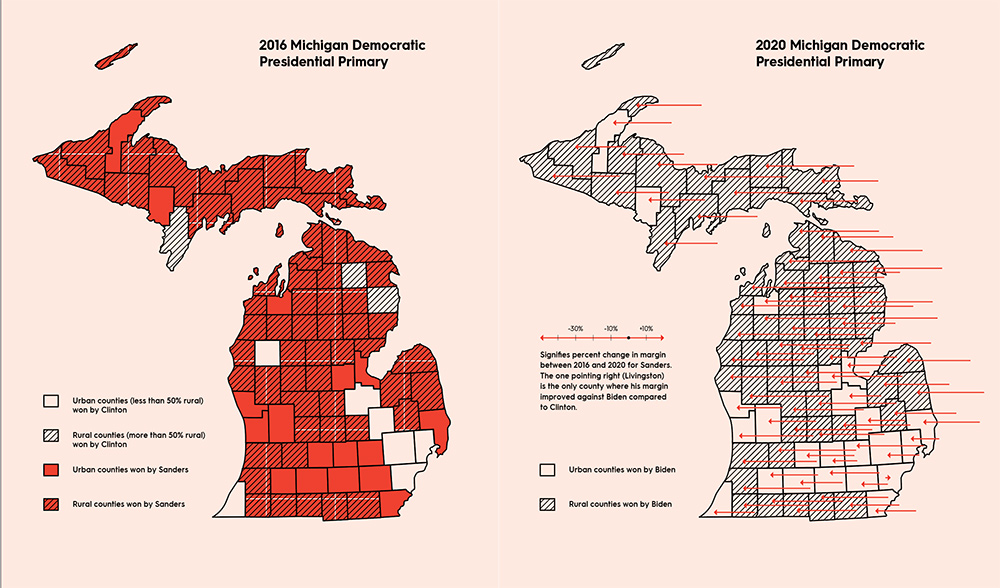
The Sanders campaign routed Hillary Clinton in Michigan in 2016, winning seventy-two of the state’s eighty-four counties. The victory seemed to vindicate Bernie’s appeals to working-class Rust Belt voters: in Michigan’s open primary, Sanders commanded significant backing from independents, young voters, and others outside the typical Democratic Party electorate. And nowhere was this support more obvious than in the rural and deindustrialized areas that liberal commentators had earlier dismissed as irredeemably conservative and backward.
Michigan experienced another stunning result in 2020 — but this time, Bernie was on the losing end. Joe Biden won every single county in the state. There were undoubtedly many factors contributing to this loss, including the Democratic field’s consolidation around Biden and the accelerating coronavirus pandemic, which, at the time of Michigan’s primary, had not yet reached crisis proportions but nonetheless suppressed turnout.
Another component seems to be that Bernie lost much of the rural support he enjoyed in 2020. It’s impossible to say exactly what’s to blame for Bernie’s steep drop-off in Michigan’s rural counties. Some have suggested that 2016’s results reflected antipathy for Hillary Clinton more than genuine support for Sanders’s political revolution; others have emphasized voters’ heightened sensitivity to electability concerns in 2020. But it’s clear that, for Bernie Sanders, a great many of the voters who had earlier delivered him the state either stayed home or pulled the lever for his opponent.