How the Antislavery Movement Ignited a Political Revolution
The antislavery movement of the mid-nineteenth century fused moral appeals against the sin of slavery with demands that spoke to the material interests of ordinary Northerners. Matt Karp, author of “The Mass Politics of Antislavery,” explains how that movement led to emancipation — and what lessons it offers to those trying to forge a political revolution today.
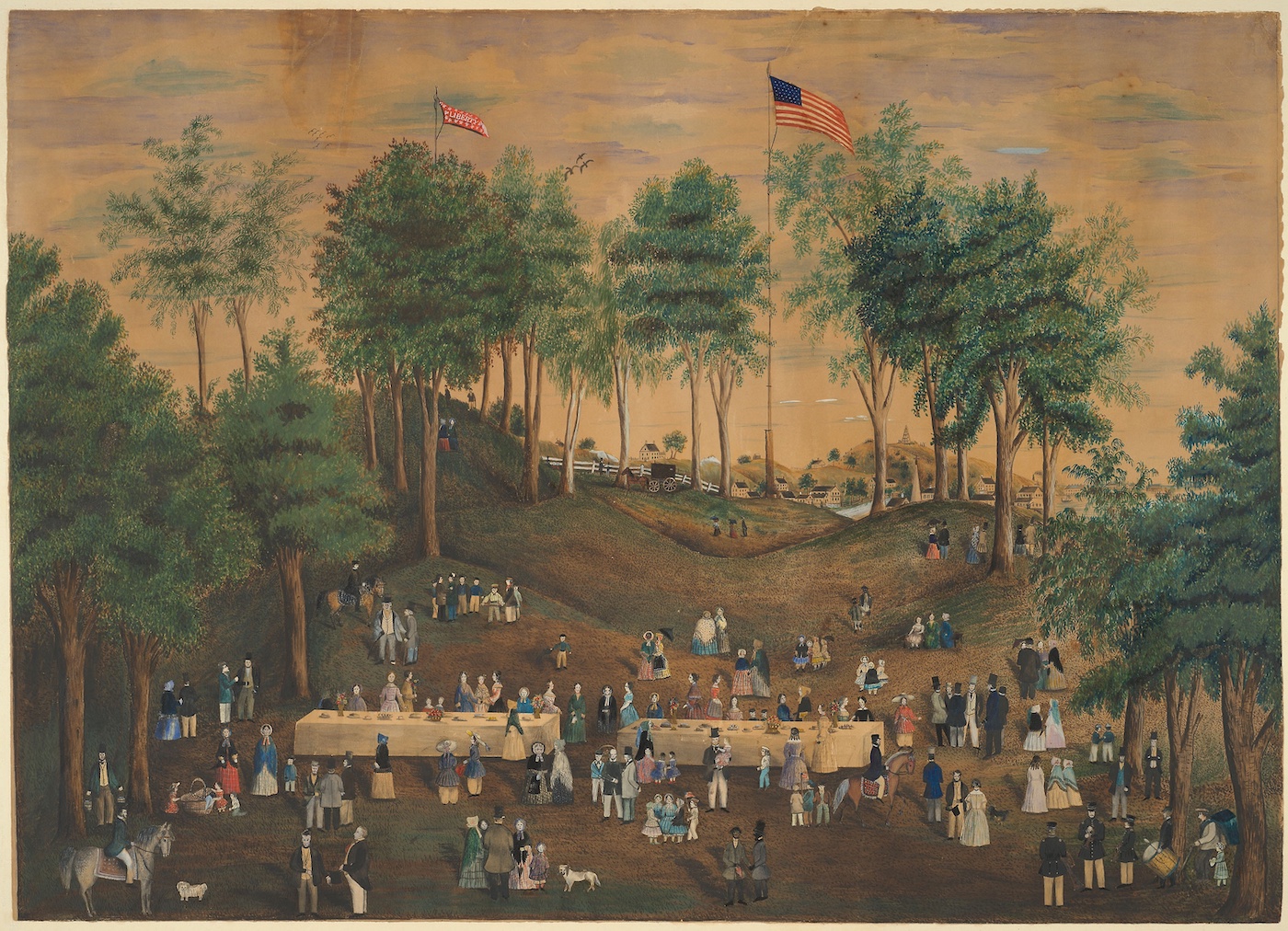
“Anti-Slavery Picnic at Weymouth Landing, Massachusetts” by Susan Torrey Merritt, circa 1845.
In 1856, the black minister Henry Highland Garnet, who had escaped from slavery as a child, returned to the United States after some years in the Caribbean. He found the nation transformed, noting with awe and appreciation “the great spread and intensification of Anti-Slavery feeling at present . . . The most promising sign of the coming downfall of Slavery is, that the people are beginning to think and talk, and above all, to vote and pray aright for it.”
The transformation in political consciousness that Garnet witnessed in 1856 is the subject of Matt Karp’s essay in Catalyst, “The Mass Politics of Antislavery,” which traces the development of the movement against slavery in the decades leading up to the Civil War. This movement included militant abolitionists, but also many ordinary white Northerners and small farmers — a diverse coalition pulled together by the nascent Republican Party.
Founded in 1854, the Republican Party was part of a movement that brought abolitionism from the fringe to the center of American politics by fusing moral opposition to slavery with appeals to the material interests of those who might otherwise have been indifferent to the antislavery cause. Indeed, hatred of “the Slave Power” became the driving force within the Republican movement, which never lost sight of abolitionism, even as it sought to expand its appeal and broaden its base.