The Outrageous Optimism of Jean-Paul Sartre
The French philosopher Jean-Paul Sartre died forty years ago today. Sartre’s philosophy and political values can still inspire struggles for freedom today.
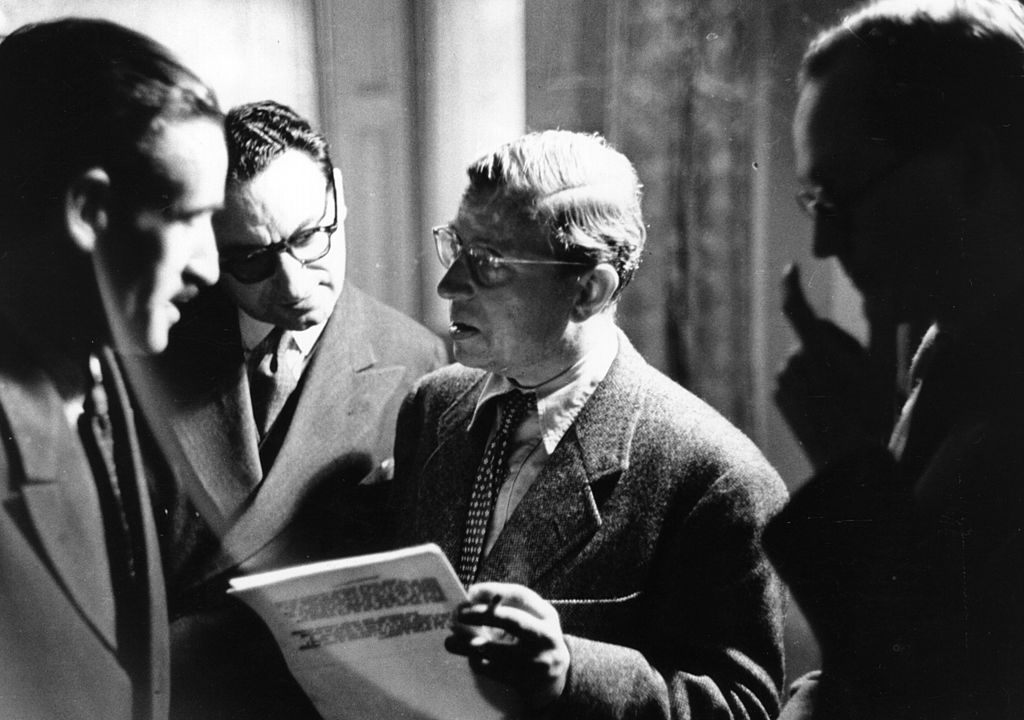
French philosopher and author Jean-Paul Sartre during an interview, 1947. Charles Hewitt / Getty
April 15 is the fortieth anniversary of the death of Jean-Paul Sartre. I can still remember hearing the news. It was not unexpected — he had been seriously ill for some time — but it still came as a shock. For those of my generation who had made our way towards socialist politics in the 1950s and 1960s, Sartre had been a guide and an important influence, and he left behind an enormous body of work.
There were huge volumes on philosophy and Marxist theory, but also novels and plays that dramatized the philosophical questions and made them painfully concrete. Then there were political polemics, rooted in very specific situations. After his death, the discovery of unpublished manuscripts — among them a film script on Freud — revealed new aspects of this complex and prolific author.
“Condemned to Be Free”
Sartre is often presented as a pessimistic thinker. In his novel Nausea, he wrote: “Every existing thing is born without reason, prolongs itself out of weakness, and dies by chance.” Perhaps the best-known quotation of Sartre’s comes from his play In Camera — “hell is other people.” But if his starting-point seems bleak — we live in a godless, meaningless universe — the logic is that all meaning, all values, come from human beings, from ourselves. In Sartre’s own phrase, we are “condemned to be free.”