Worker Power on the Swedish Docks
The Swedish Dockworkers Union has announced plans for indefinite strike action. The future of independent, left-wing, rank-and-file trade unionism in Sweden hangs in the balance.
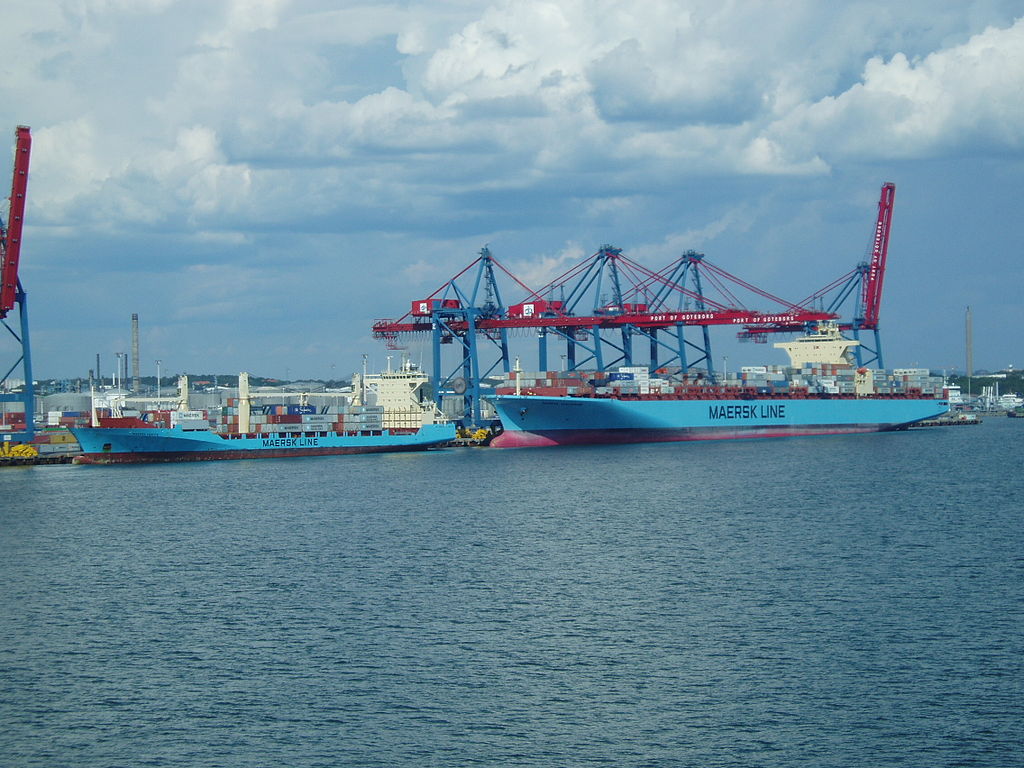
Feeder ship Maersk Venice and ocean going container ship Maersk Singapore in Port of Gothenburg, July 2008.Marcusroos / Wikimedia
The Swedish Dockworkers Union (SDU), founded in the 1970s, is widely recognized for its long-standing militant rank-and-file approach to trade unionism that diverges from the dominant model of bureaucratic business unionism more typically found in Sweden. Nevertheless, as one of the sole independent trade unions in the country, the SDU has faced major challenges over the years from both employers in the sector as well as the mainstream trade union movement, and more recently, from government.
The union is currently engaged in an existential struggle with employers from the entire sector. What began as an industrial dispute with APM Terminals at the Port of Gothenburg has become a national dispute that has included significant changes to the right to strike along the way, backed by the Social Democratic Party. In response to employer lockouts, the SDU has announced plans for indefinite strike action. The future of independent, left-wing, rank-and-file trade unionism in Sweden hangs in the balance.
In order to better understand the history of the union and the dispute, Katy Fox-Hodess spoke last month with Erik Helgeson. Erik is a dockworker at the Port of Gothenburg who serves on both the local and national board of the SDU and is a member of the national bargaining committee.