Reparations Isn’t a Political Demand
The reparations demand resides largely in the realm of the political imaginary. There are more effective means of fighting oppression.
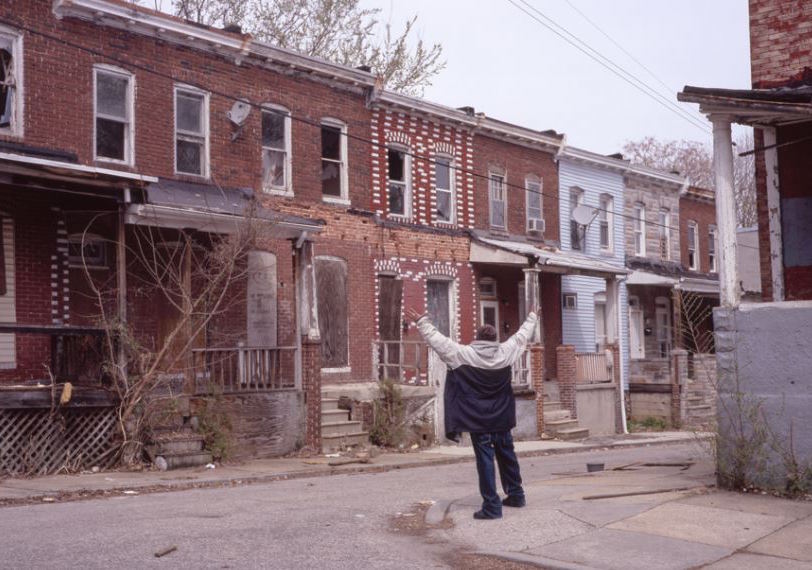
Baltimore, 2014. Patrick Joust
I’ve gotten a range of reactions to my “open letter” to Ta-Nehisi Coates. Some people find the piece extremely compelling, while others are horrified and accuse me of putting “class over race” or worse, “Marxplaining.”
Perhaps the unkindest criticisms are from people who charge me with not seeing race, or not really appreciating the power of racism in American society. If we must play that game, I can show you around the South Louisiana parish where I grew up, which was still in violation of a 1969 federal school desegregation order when I left the state to attend graduate school in the early nineties.
But let’s move beyond character assassinations. Such dismissive language does little to debunk my argument and basically just rehearses the same anti-Marxist posturing that I’ve become accustomed to in academia, where any insistence on examining the internal class dynamics of black social and political life is labeled “economic reductionist.” Ironically, in most cases, the most vocal opponents of class analysis of black life seem painfully aware of their own class position and yet are unwilling to address its political implications in any reflexive and critical manner.